A double-hung window that refuses to stay open is one of the most common window problems homeowners report across Woodbridge VA. The sash drops on its own, slams shut, or only stays up if propped with a book. The fix is almost always a failed window balance, not a broken window.
Advanced Window & Glass Repair has handled hundreds of these calls across Lake Ridge, Dale City, and Occoquan, and this guide explains exactly why it happens, how to diagnose the type of balance in your window, and what window balance and spring repair in Woodbridge actually involves.
The Real Reason Your Double-Hung Window Drops (and Why It’s a Safety Issue)
Most homeowners assume the window itself is broken. It almost never is. The glass, frame, and sash are usually fine. What has failed is the balance system hidden inside the side jambs.
A balance is a spring or counterweight mechanism that offsets the weight of the sash. When it works, the sash stays exactly where you place it. When it fails, gravity wins and the sash drops.
This is more than an annoyance. A double-hung sash weighs 15 to 30 pounds depending on glass thickness and frame material. A sudden drop from full open to closed is fast enough to crush fingers or break a child’s hand. Repair specialists call this the guillotine effect for good reason. If your sash has dropped without warning even once, treat it as urgent rather than cosmetic.
Three things typically go wrong. The spring loses tension and can no longer support the sash weight. The cord or pivot shoe disconnects from the sash. Or debris jams the channel, preventing smooth movement.
The Four Balance Systems Found in Woodbridge Homes
Woodbridge housing stock spans pre-1960 wood-frame homes near Old Bridge Road, 1980s and 1990s vinyl-window builds across Lake Ridge and Dale City, and modern townhomes in Belmont Bay. Each era used a different balance type. Knowing which one is in your window tells you what part to order.
Block-and-Tackle Balance
A flat metal channel with a pulley system and nylon cord inside. Common in 1990s and 2000s vinyl windows. The cord stretches or snaps over time, and the sash drops without warning.
How to spot it: wider rectangular channel in the jamb, visible cord or ribbon inside the housing, sudden drop when it fails.
Spiral (Spring) Balance
A metal rod with a twisted spring inside. Found in older wood windows and some mid-range vinyl from the 1980s and 1990s. The spring loses tension after about 15 years and the sash starts sliding down slowly.
How to spot it: visible metal tube along the side jamb, small plastic tip or clip at the bottom, slow downward creep rather than a sudden drop.
Constant-Force (Coil) Balance
A flat coil spring inside a plastic housing, similar to a measuring tape. Standard in newer vinyl windows from the 2010s onward. These last longer but the housing can crack in extreme temperature swings.
How to spot it: slim plastic cartridge in the sash channel, coiled metal visible inside the housing, very smooth operation when working.
Weight-and-Pulley System
The original setup in pre-1960 Woodbridge, VA homes, including many properties around Occoquan Historic District and older sections of Marumsco. Lead or cast-iron weights hang inside hollow wall cavities, connected to the sash by a rope or chain.
How to spot it: rope or chain visible at the sash edge, wooden window frame, a covered access pocket in the lower jamb. Frayed ropes are the most common failure point. For homes this old, older home window glass replacement is sometimes more practical than chasing parts that haven’t been manufactured in decades.
| Balance Type | Common Window Age | Failure Style |
|---|---|---|
| Spiral | Pre-2000 vinyl/aluminum | Slow creep downward |
| Block & Tackle | Mid-1990s to present | Sudden drop |
| Constant Force | 2000s to present | Gradual sag |
| Weight & Pulley | Pre-1960s | Rope frays, sash drops |
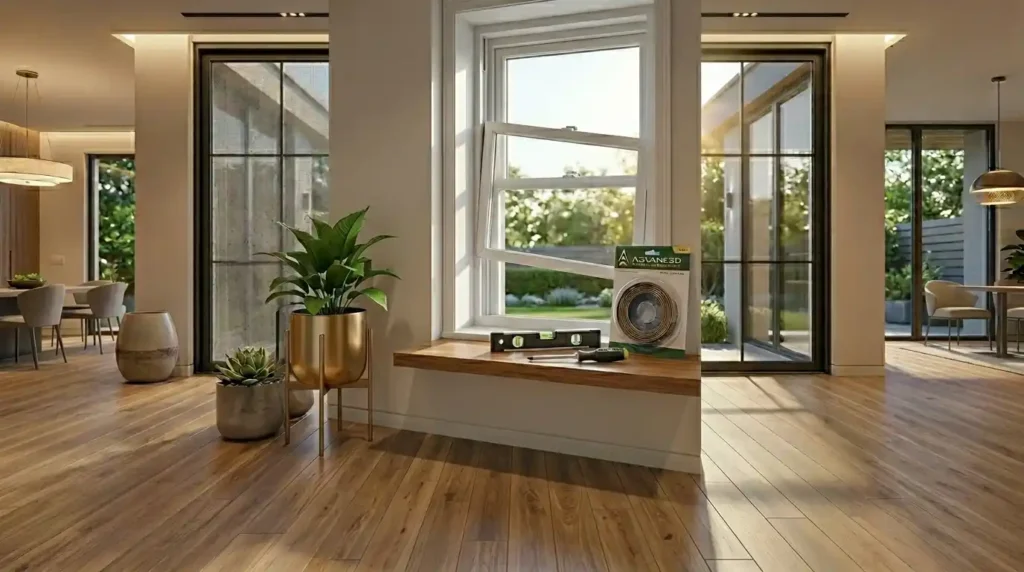
To identify which type you have, raise the sash a few inches, tilt it inward, and look at the side track. The shape and material tell you immediately.
Why Window Balances Fail Faster in Woodbridge VA
Window balances in Woodbridge wear out faster than the manufacturer warranty suggests. The Northern Virginia climate is the main reason, and the timing of when most local homes were built makes it worse.
Summer humidity along the Potomac River pushes relative humidity above 70 percent for months at a stretch. Wood frames in older homes absorb that moisture and swell, putting extra friction on the balance. Vinyl frames contract and expand through 90-degree temperature swings between January lows and August highs, stressing plastic balance housings until they crack.
Local weather patterns make a real difference here. The Prince William County area sees over 40 inches of annual precipitation and average July humidity above 70 percent. That accelerates rust on metal springs and breaks down lubricants in pulley systems.
Homes near Occoquan Bay, Belmont Bay, and Leesylvania State Park see the worst of it. Salt air carries inland on storm fronts and corrodes spring metal within a decade. The same humidity that destroys balances also breaks down window seals, which is why foggy IGU repair across the DMV is often needed on the same windows where balances have started to fail.
The 1980s and 1990s Build-Era Problem
Lake Ridge, Dale City, and Montclair saw explosive residential development through the 1980s and 1990s. The builder-grade hardware installed during that boom was functional but not built for the long haul. Original spiral and block-and-tackle balances carry a service life of 15 to 20 years. The math is simple: those windows are now squarely in failure territory, and balance repair is one of the most common service calls in the area.
How to Diagnose the Exact Problem on Your Window
Before ordering parts or booking a repair, run this three-step diagnostic.
Step 1: Test the Sash
Lift the sash to the halfway point and let go. If it drops more than two inches, the balance has failed. If it drops slowly over a few seconds, the spring is weak but not broken. If it drops only on one side, only one balance has failed. With a snapped spiral, the rod often spins freely inside the channel with no resistance at all.
Step 2: Inspect the Tracks
Tilt the sash inward and look at the side jamb tracks. Look for a snapped cord, a disconnected pivot shoe, dirt buildup, or visible spring damage.
Step 3: Identify the Balance Code and Tension Rating
Replacement balances must match three variables: type, length, and tension rating. Tension is measured in pounds and calibrated to the sash weight. Block-and-tackle balances have a number stamped on the metal channel. Spiral balances use color-coded tips (red, blue, green) to indicate spring strength. Photograph this code before removing anything. Without it, ordering the correct replacement is impossible, and a close-enough substitute creates uneven pressure that fails again within months.
When to Call a Pro vs Fix It Yourself (Woodbridge Decision Table)
Some balance repairs are straightforward. Others should never be attempted by a homeowner. Use this table to decide.
| Situation | DIY or Pro |
|---|---|
| Single block-and-tackle cord disconnected | DIY (15 minutes) |
| Spiral balance lost tension | DIY with a tensioning tool |
| Constant-force coil cracked | Pro (parts are specific) |
| Sash dropped more than once after repair | Pro (frame may be warped) |
| Window over 25 years old with multiple failures | Pro (full replacement assessment) |
| Upper sash failure on a tilt-in window | Pro (parting bead removal needed) |
| Both balances failed at the same time | Pro (full balance set replacement) |
| Weight-and-pulley window with frayed rope | Pro (wall cavity access needed) |
For anything beyond a single cord or simple spiral re-tension, call Advanced Window & Glass Repair. The team at our Woodbridge office handles all four balance types and arrives with the right parts for most common Andersen, Pella, and Jeld-Wen windows in stock. Our coverage extends across Prince William County and Fairfax County, so homeowners looking for window repair specialists in Burke get the same dispatch and pricing as Woodbridge customers.
The 5-Minute Shoe Reset: Step-by-Step DIY for Block-and-Tackle Windows
Before calling anyone, try this. The balance shoe is a small plastic carrier inside the side channel that connects the balance to the sash. It often pops loose during normal use, and re-engaging it takes about five minutes with no parts.
Tools needed: flathead screwdriver, work gloves, and ideally a second person to steady the sash.
- Unlock the window and raise the sash three to four inches.
- Press both tilt latches inward and tilt the sash toward you to 90 degrees.
- Lift one side of the sash to free the pivot bar from the shoe, then lift the other side out.
- Place the sash on a padded surface where the glass cannot get scratched.
- Look at the side jamb. The pivot shoe often sits at the bottom of the track when it has slipped.
- Insert the flathead screwdriver into the shoe slot and rotate a quarter-turn to lock it into the loaded position.
- Slide the shoe back to the top of the track if needed.
- Re-engage the sash pin into the shoe notch on both sides simultaneously.
- Tilt the sash back into the frame and test it at the halfway mark. It should hold position without drift.
Safety warning. A double-hung sash weighs 15 to 30 pounds. Never support it with one hand while using a tool with the other. If your grip slips, the sash can fall and cause serious finger injury or shatter on impact. Work with a helper whenever possible.
If the sash still drops after the shoe reset, the balance unit itself is broken and needs replacement.
Cost of Window Balance Repair in Woodbridge VA (2026)
Pricing varies by window brand, balance type, and number of windows affected. These are typical Woodbridge, VA 2026 ranges based on local market rates.
| Repair Type | Typical Range | What Affects Price |
|---|---|---|
| DIY parts only | $25 to $60 per balance | Brand, supplier |
| Single balance replacement (pro) | $150 to $200 | Brand, balance type, sash weight |
| Both balances on one window | $200 to $300 | Same as above |
| Full sash + balance replacement | $300 to $450 | Sash material, glass type |
| Multiple windows (3+) | $120 to $180 per window | Bulk pricing applies |
| Full window replacement | $400 to $1,000+ per unit | Frame condition, glass spec |
Repair almost always wins on cost. Spending $150 to extend a window’s useful life by a decade works out to about $15 a year. Replacement only makes sense when the frame is rotted, the glass seal has failed multiple times, or the window is past 25 years with chronic balance issues. For homes with insulated glass, the math is similar to double pane window repair pricing where repair beats replacement in most cases.
Prices shift with sash weight, window age, and whether the original brand still supplies parts. Andersen and Pella balances cost more than generic vinyl. Older windows where parts are discontinued may need a full sash replacement.
Worried your repair will turn into a full window replacement? It rarely does. Most Woodbridge double-hung problems are balance-only fixes that take under an hour per window. Call our Woodbridge office at (571) 351-3692 for a free phone estimate before you book anything. We tell you the real cost upfront, not after the technician arrives.
Common Mistakes Woodbridge Homeowners Make
A few mistakes turn a simple $150 balance repair into a $400 frame repair or a full window replacement.
Forcing the Sash Down
When the balance fails, some homeowners push the sash down hard to lock it. This bends pivot bars and cracks shoe housings. Worse, it puts you directly under a 30-pound sash with no support. Always tilt and remove the sash instead.
Replacing Only One Balance
This is the most expensive mistake homeowners make. If one balance has failed after 15 years, the second one is weeks away from failing too. More importantly, mismatched tension between left and right sides causes the sash to rack, bind, and fail again within months. Always replace balances in pairs, even when only one side looks broken.
Buying the Wrong Replacement Part
Block-and-tackle and spiral balances come in dozens of sizes, lengths, and tension ratings. Ordering one based on length alone almost guarantees a return. Always photograph the stamped code or color-coded tip first, and match all three variables: type, length, and pounds rating.
Ignoring the Safety Risk
A failing balance is not a cosmetic issue. The guillotine effect injures children and pets every year. If your sash has dropped suddenly even once, treat the repair as a safety priority and stop using the window until it is fixed.
Using WD-40 on Tracks
WD-40 attracts dust and gums up over time. Use silicone spray or PTFE lubricant instead. This matters more in Woodbridge because of high pollen levels in spring and grit blown in from I-95.
Conclusion
A double-hung window that won’t stay open is rarely a sign that the window itself needs replacement. In nearly every case, the fix is a balance repair that costs a fraction of a new window and takes under an hour per opening. Knowing which of the four balance types your window uses, catching the failure early, and replacing balances in pairs keeps the cost low and the repair lasting.
If your sash keeps dropping, foggy glass between the panes is also a sign of a separate problem worth checking. Read our foggy window repair guide for Woodbridge homes to see how seal failure and balance failure often appear in the same window. The team at Advanced Window & Glass Repair handles both in a single visit across Woodbridge, Dale City, Lake Ridge, and the wider Prince William County area.
Stop propping your window open with a book. Advanced Window & Glass Repair stocks balance parts for most Woodbridge homes and completes the majority of repairs in one visit with flat-rate pricing and no overtime charges. Call (571) 351-3692 now for a free phone estimate, get a straight answer on the cost, and have a same-day appointment scheduled before the end of the call.
Frequently Asked Questions
How long do window balances usually last in Woodbridge VA homes?
Window balances in Woodbridge typically last 12 to 18 years. Northern Virginia humidity, salt air from the Potomac, and large temperature swings shorten the lifespan compared to drier regions. Spiral balances tend to fail first, often around year 12. Block-and-tackle balances last longer in vinyl windows but the cord can stretch or snap suddenly. Constant-force coils last longest but the plastic housing can crack in extreme winters. Weight-and-pulley systems in pre-1960 homes often last 50 years or more, but the rope inside frays and needs replacement on its own cycle. Replacing both balances on a window when one fails is the most cost-effective approach because the second is usually close to failing too.
Can I replace a window balance myself, or do I need a professional?
Simple balance resets and block-and-tackle cord reconnections are within most homeowners’ ability with basic tools. Replacing a spiral balance with the correct tensioning tool is also doable for someone comfortable with tools. However, constant-force coil replacements, upper-sash failures on tilt-in windows, weight-and-pulley repairs that require wall cavity access, and any repair on a window over 25 years old should go to a professional. The risk of cracking the frame, shattering the sash, or being injured by a falling sash is higher than the cost savings of DIY. Advanced Window & Glass Repair charges $150 to $200 for a single balance replacement in Woodbridge, which is comparable to the cost of buying the wrong part once and starting over.
Why do my windows fail more often than my neighbor’s in Lake Ridge?
Window balance failure depends on three local factors that vary block by block: how much direct sunlight the window receives, whether it sits on the side of the house facing prevailing storm winds from the Potomac, and how often the window is opened. South-facing windows in Lake Ridge see UV degradation that breaks down balance lubricants faster. Windows opened daily for kitchen ventilation cycle the spring more times per year than rarely-used bedroom windows. Even windows in the same house can fail at different rates because of these factors. The 1980s and 1990s build era across Lake Ridge also means many homes there hit their balance failure window at the same time, so neighbors often deal with this within a year or two of each other.
What’s the difference between a window balance and a window sash?
The sash is the part that holds the glass and slides up and down. The balance is the spring or counterweight system hidden inside the jamb that supports the sash weight. When a sash won’t stay up, the sash itself is rarely the problem. The balance has failed. Replacing the balance restores function without touching the glass or frame. Replacing the sash means removing and reordering the entire moving panel, which costs three to five times more. Always diagnose the balance first.
Should I repair my balance or replace the whole window?
For most Woodbridge homes, balance repair is the right call. Replacement costs $400 to $1,200 per window installed, while balance repair costs $150 to $300. Replacement only makes sense if the frame is rotted, the glass seal has failed multiple times, or the window is over 25 years old with chronic balance failures. Newer windows with a single balance failure should always be repaired. For a broader picture of when repair beats replacement across different problems, our full guide to glass damages and repair options covers the decision framework. Advanced Window & Glass Repair gives an honest assessment over the phone before sending a technician, so homeowners know whether repair or replacement applies before any work begins.
How fast can someone fix my window balance in Woodbridge?
Most balance repairs in Woodbridge are same-day jobs. The Woodbridge office at Advanced Window & Glass Repair stocks the most common Andersen, Pella, Jeld-Wen, and generic vinyl balance parts. Phone estimates are free and take under five minutes. Standard repairs are completed in one visit lasting 30 to 60 minutes per window. Multi-window jobs run two to three hours total. For windows where parts have to be ordered, the wait is usually three to five business days, and the technician returns to install once parts arrive.