
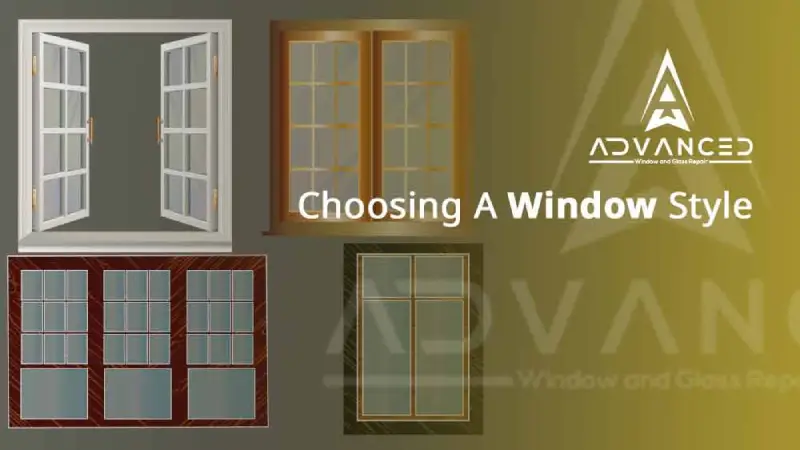
The window style affects how a room feels, how it ventilates, how easy the window is to maintain, and how well it performs thermally. Choosing based on appearance alone often leads to a window that works poorly for the space it occupies.
Advanced Window & Glass Repair provides window replacement services in Northern Virginia, DC, and Maryland. The right window type depends on the wall position, room use, climate exposure, and architectural style of each opening. This guide covers every major window style, what each does well, and where each performs poorly.
Single-Hung and Double-Hung Windows
Single-hung and double-hung windows are the most common residential window types in the Northern Virginia and DMV area. Their vertical sash configuration suits the proportions of most colonial, federal, and traditional homes throughout the region.
Single-hung windows have a fixed upper sash and a movable lower sash that slides vertically. Ventilation is limited to the lower half of the opening. Single-hung windows are less expensive than double-hung because they have half the movable hardware. They are appropriate for openings where the upper half of the window is inaccessible for opening, such as above a kitchen worktop or in a bathroom with limited reach.
Double-hung windows have both sashes operable. The lower sash opens upward and the upper sash opens downward. This allows ventilation at the top only, the bottom only, or both simultaneously. Opening both sashes creates stack ventilation where warm air exits at the top while cooler air enters at the bottom. This is particularly effective in bedrooms and living rooms in the DMV’s humid summers. Most modern double-hung windows have tilt-in sashes that allow both interior faces to be cleaned from inside the room.
The balance mechanism is the critical moving component in both types. Spiral balance springs and block-and-tackle systems hold the sash open at any position. Window balance and spring repair is the most frequent maintenance call for double-hung windows in Northern Virginia. This is especially common in homes built between 1985 and 2005 where balance springs are reaching the end of their service life.
Casement, Awning, and Slider Windows
These three types suit applications where a double-hung sash is less practical. Wide openings, low sills, and positions where maximum ventilation is the priority are common examples.
Casement windows are hinged on one vertical edge and swing outward when cranked open. A fully opened casement catches passing breezes across its full face, which makes it the most effective ventilating window type per unit of glass area. The crank mechanism pulls the sash tight against the weatherstripping on all four sides when closed, creating a compression seal that performs better than the sliding seal of a double-hung sash. Casement windows are well suited to kitchen sinks, where the sash can be operated by the crank without leaning over the worktop.
Awning windows are hinged at the top and swing outward at the bottom. The open sash deflects rain, allowing the window to remain open during light rain without water entering. This makes them a practical choice above exterior doors, in bathrooms, or in any position where ventilation is needed regardless of weather. Awning windows are often combined with fixed picture windows. The awning provides ventilation while the picture window provides the view.
Slider windows move horizontally on a track, similar to a small-scale sliding patio door. They are suited to wide, low openings where a double-hung sash would have awkward proportions and where the horizontal opening direction is not obstructed by adjacent features. Slider windows require the same track cleaning and roller maintenance as sliding patio doors. Residential glass repair and replacement covers all three window types across Northern Virginia, DC, and Maryland for both installation and hardware servicing.
Picture, Bay, and Bow Windows
These window types prioritise light, views, and interior space over ventilation. They are used in specific positions where they can make the most of the architectural features they create.
Picture windows are fixed, non-opening panes of glass. They admit more light than any other window type of equivalent size because there are no sash frames within the glass area. Picture windows are used where the view or light is the primary objective. They suit positions where ventilation is impractical, such as above a roofline, in a stairwell, or at the end of a corridor. They require no hardware maintenance beyond the glazing seal.
Bay windows project outward from the exterior wall and create an interior recess. The typical configuration is a large central picture window flanked by two angled side windows, which may be casement or double-hung. Bay windows increase the perceived floor area of the room, create a window seat or storage area in the recess, and bring light in from three directions rather than one. They require a projecting roof, flashing, and a structural header above the opening.
Bow windows are similar to bay windows but use a curved arrangement of four or more window units to create a gentle arc. The individual units are narrower and the curve gives the window a softer appearance from both inside and outside. Bow windows are suited to traditional and Victorian architectural styles. Both bay and bow windows require careful flashing and drainage detailing because the horizontal surfaces they create are exposed to weather. Advanced Window & Glass Repair advises on glass specification for bay and bow window installations, where the angled side units often require different glass sizes and sometimes different thermal specifications from the central unit.
Matching Window Style to Your Home’s Architecture
Window style should relate to the proportions and character of the building. Mismatched window styles create visual inconsistency that is difficult to correct without replacement.
Traditional homes, including colonial, federal, craftsman, and Tudor styles, suit windows with vertical proportions and divided light patterns. Double-hung windows with grid inserts match these styles well. Wide horizontal sliders or large picture windows tend to conflict with the vertical character of traditional facades.
Contemporary and mid-century modern homes suit horizontal proportions and minimal frame profiles. Wide sliders, clerestory windows, and large fixed panes without grid inserts align with the horizontal emphasis of these styles. Narrow double-hung windows with traditional grid patterns look out of place in a contemporary setting.
Cape Cod and ranch homes occupy a middle ground. Low ceilings and wide wall spans suit wider windows with a horizontal emphasis. The traditional materials and proportions of these styles still call for divided light grids rather than slim aluminium profiles.
For replacement windows in an established neighbourhood, the window style should relate to both the home and to what surrounding properties use. Planning authorities in historic districts or conservation areas in Northern Virginia, DC, and Maryland may specify window style and material requirements for replacement units.
Energy Efficiency by Window Type
Window style affects thermal performance through two mechanisms: the quality of the seal when closed, and the frame-to-glass ratio.
Casement and awning windows create a compression seal when closed, which is more airtight than the sliding seal of single-hung, double-hung, and slider windows. This makes casement and awning types slightly more efficient at preventing air infiltration at the sash perimeter.
Picture windows have no movable sash, so there is no sash perimeter seal at all. The only air infiltration path is at the outer frame. This makes picture windows among the most thermally efficient types when the glass specification is high. There is no sash hardware and no sliding seal to degrade over time.
Double-hung windows with tilt-in sashes have two sliding sash seals rather than one. Each seal is a potential air infiltration point. Keeping these seals in good condition through annual weatherstripping inspection and replacement is important for maintaining thermal performance over time.
All window types benefit from the same glass specification upgrades. These include double-pane argon fill, Low-E coating appropriate for the wall orientation, and warm-edge spacers at the IGU perimeter. The frame material and sash seal type affect the marginal performance difference between window styles. Glass specification has the larger effect on overall thermal resistance.
Choosing the right window style for a specific opening involves the room function, the wall position, the home’s architecture, and the thermal specification for the DMV climate. Call (571) 351-3692 or get in touch with Advanced Window & Glass Repair via the contact page to book a consultation across Northern Virginia, DC, or Maryland and get a clear recommendation on the right style and specification for each opening.
Frame Material Options
The frame material affects maintenance requirements, thermal performance, and visual character.
uPVC frames are the most widely fitted material in Northern Virginia replacement windows installed from the 1990s onward. They require no painting, are resistant to moisture, and do not rot. The manufacturing process allows colour options including white, cream, and woodgrain foils, though the range is more limited than timber or aluminium. uPVC frames are not suited to properties with strict design standards or historic designations.
Timber frames are the traditional material and remain the correct choice for historic properties and conservation areas. They provide excellent insulation and are available in any paint colour. They require periodic repainting, typically every five to seven years for exterior surfaces, and inspection of the base rail and sill for moisture damage. A well-maintained timber frame outlasts any other frame material.
Aluminium frames provide the slimmest sightlines of any material and are used in contemporary architecture where thin profiles and large glass areas are the design priority. Aluminium conducts heat at the frame edge, which reduces overall window performance unless a thermal break is included. Powder-coated aluminium frames are available in any RAL colour and require minimal maintenance.
Composite and fibre-reinforced frames combine the appearance of timber with the low-maintenance characteristics of synthetic materials. They are more dimensionally stable than timber across temperature and humidity cycles and do not require repainting. They are more expensive than uPVC but significantly lower maintenance than timber.
The U.S. Department of Energy guidance on window replacement covers U-factors, SHGC ratings, and climate zone recommendations for window selection in the Northern Virginia, DC, and Maryland area. It provides performance benchmarks that apply across all frame materials and window styles when specifying replacement windows.
Conclusion
Window style is a decision that affects ventilation, light, thermal performance, maintenance, and the visual character of the property for decades. Double-hung windows suit traditional homes and provide balanced ventilation. Casement and awning types provide better seals and more airflow from smaller openings. Picture, bay, and bow windows prioritise light and views over ventilation. Frame material should reflect both the maintenance budget and the architectural requirements of the property.
For homeowners across Northern Virginia, DC, and Maryland selecting replacement windows, the right choice for each opening may differ across the same property. Advanced Window & Glass Repair covers window replacement and installation across the full DMV area. The team advises on style, specification, and installation for individual openings and full-property projects. For guidance on matching glass type to window orientation, the guide to choosing the right glass for windows and doors covers Low-E specifications and performance ratings.
Advanced Window & Glass Repair provides window replacement and installation across Northern Virginia, DC, and Maryland for all window styles and frame materials. Call or reach out through the contact page to book a consultation or request a quote on any window replacement project.
Frequently Asked Questions
Which window style provides the best ventilation?
Casement windows provide the best ventilation per unit of glass area because the fully opened sash catches passing air across its full face rather than a partial opening. Double-hung windows allow stack ventilation when both sashes are open simultaneously, which is effective in rooms with significant height. Awning windows allow ventilation during light rain. Slider windows and single-hung windows provide ventilation from half the glass area at most.
What window style suits a traditional colonial home in Northern Virginia?
Double-hung windows with divided light grids suit colonial and traditional homes well. The vertical sash proportion aligns with the architecture, and the divided light pattern matches the historical character of the style. uPVC or timber frames in white or off-white are the appropriate finish. Wide horizontal slider windows or frameless picture windows conflict with the vertical emphasis of colonial facades.
Are casement windows more energy-efficient than double-hung windows?
Casement windows create a compression seal when closed, which performs better than the sliding sash seal of a double-hung window. The difference in air infiltration is measurable but not significant compared to the effect of glass specification. A double-hung window with high-quality weatherstripping and a double-pane Low-E glass unit performs better thermally than a casement window with poor seals and standard clear glass.
What is the difference between a bay window and a bow window?
A bay window uses three to five window units arranged at angles. The typical configuration is a large central unit flanked by two angled side units at 30 or 45 degrees. This creates a projecting box with flat sides. A bow window uses four or more narrower units arranged in a gentle curve. The curved arrangement gives a softer visual effect from both inside and outside. Bay windows typically project more dramatically from the wall surface; bow windows produce a shallower projection with a more gradual curve.
How do I choose between uPVC and timber window frames?
The decision depends on the architectural requirement, the maintenance budget, and any planning or historic designation that applies to the property. uPVC frames require no painting and no routine maintenance beyond cleaning. Timber frames require repainting every five to seven years but provide better insulation, can be repaired rather than replaced, and are required in most historic districts and conservation areas in Northern Virginia and DC. For properties without design restrictions, uPVC is the lower-maintenance choice. For historic properties or those in conservation areas, timber is often the only approved option.


