
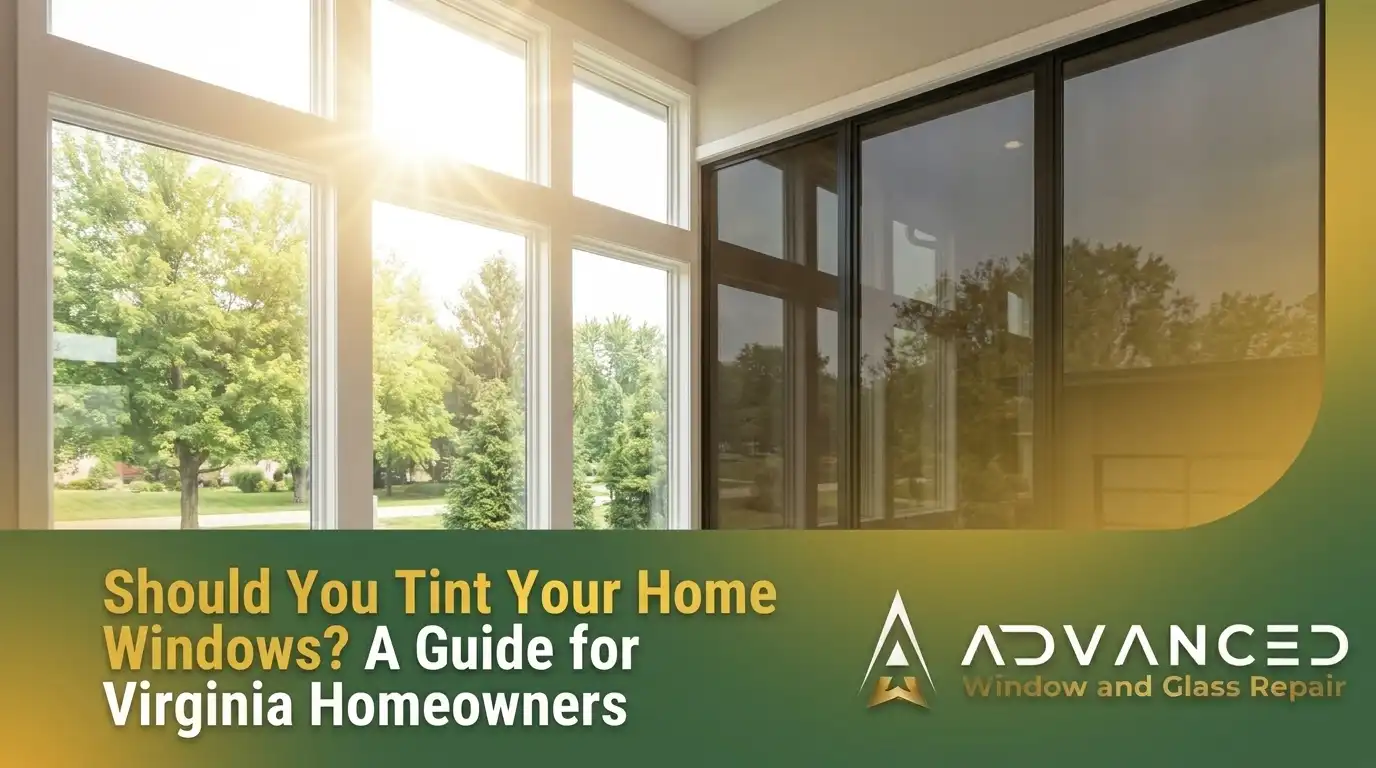
Window tinting promises cooler rooms, lower energy bills, and less glare for a Virginia home. It also carries a real risk that most tint companies never mention: a failed seal on double-pane glass. Advanced Window & Glass Repair has repaired windows across Northern Virginia, Maryland, and DC since 1999. Plenty of those windows were tinted first. This guide covers the honest benefits, the real risks, and how to actually decide whether to tint a Virginia home’s windows.
What Does Window Tint Actually Do to a Virginia Home
Window film is a thin layer applied to the interior side of the glass. It blocks a portion of infrared heat, ultraviolet light, and visible glare before they reach the room. The exact amount blocked depends on the film type and its visible light transmission rating.
Ceramic film rejects heat without much colour change and works well on most modern windows. Dyed and metalised films cost less but absorb more heat directly into the glass. That heat absorption is where the conversation about risk actually starts.
Can Window Tint Damage a Double-Pane or Low-E Window
Most DMV homes built after the 1990s have double-pane or Low-E glass. That glass was engineered to perform within a specific heat range set by the manufacturer. A heat-absorbing film can push the glass beyond that range, especially on south- and west-facing windows.
When trapped heat builds between the panes, the seal around the insulated glass unit can fail. Advanced Window & Glass Repair sees this most often on windows tinted with the wrong film for the glass type. A failed seal shows up as fog or moisture trapped between the panes, sometimes within a year.
A double pane window repair and replacement assessment before tinting shows whether the glass can safely handle film. Skipping that step is the single most common mistake DMV homeowners make with tint.
What Happens When Tint Causes a Window Seal to Fail
A failed seal is not cosmetic. Moisture gets trapped inside the insulated glass unit and cannot be cleaned away from either side. The window loses its insulating value the moment the seal breaks.
Warranty coverage usually disappears once film has been applied, even if the manufacturer never approved that specific product. That leaves the homeowner covering the full glass replacement cost out of pocket. Choosing the right film from the start avoids this outcome entirely.
Foggy window repair and replacement restores clarity once a seal has already failed. Repair usually means swapping the glass unit, not reapplying the same film. The right fix depends on why the original seal gave out in the first place.
Not sure if a window can safely be tinted without risking the seal? Call (571) 351-3692 for a free phone estimate for any property in Woodbridge, Arlington, Silver Spring, or Burke, or reach us through our contact page. We can check the glass type before a single sheet of film goes on.
Does Your HOA Allow Window Tint in Virginia
Most Virginia HOAs operate under the Property Owners’ Association Act, with rules spelled out in the community’s CC&Rs. Window tint often falls under general exterior appearance rules rather than a dedicated tint policy. Dark or mirrored film draws the most scrutiny from architectural review boards.
Advanced Window & Glass Repair has worked in dense HOA communities, including Arlington, where exterior uniformity is closely enforced. A quick email to the property manager before booking tint saves a possible violation notice later. Neutral, low-reflectivity film clears review in most communities without objection.
This comes up constantly for homeowners in Arlington’s condo and townhouse communities. Our window glass repair Arlington VA technicians hear the HOA question almost every week. Checking governing documents first costs nothing and prevents a costly redo.

How to Decide Whether Tinting Is Right for Your Windows
Single-pane windows carry the least risk, since there is no sealed gas gap to stress. Double-pane and Low-E windows need a film specifically rated for that glass type. Checking the window’s age and manufacturer warranty status comes before picking any film at all.
South and west-facing rooms benefit the most from tint, since they take the most direct heat. North-facing rooms see little benefit and carry the same seal risk if the wrong film gets used anyway. Matching film choice to sun exposure, not just personal preference, drives a better outcome.
A home glass repair and replacement assessment settles the question of the frame and glass condition before a tint installer ever shows up. That single step prevents most of the seal failures homeowners deal with later.
How Much Energy Does Window Tint Actually Save
Quality film can cut cooling costs during a Virginia summer by reducing solar heat gain at the glass. The exact savings depend on window orientation, film type, and the extent of the home’s glass treated. Homeowners with large south-facing windows tend to see the biggest difference.
The Department of Energy’s guide to energy-efficient window attachments rates film performance using the same NFRC standards as windows. That third-party rating matters more than a sales brochure’s claimed percentage. Comparing a specific film’s ratings against that benchmark provides a realistic expectation.
Savings are most evident in the cooling season, with a smaller effect on winter heating bills. Film that blocks summer heat also blocks some free winter warmth from the sun. Most Virginia homeowners still come out ahead given the length of the region’s cooling season.
Window tint delivers real comfort and energy benefits for the right Virginia home. The risk sits almost entirely with double-pane and Low-E glass paired with the wrong film. Getting the glass checked first turns tinting from a gamble into a straightforward upgrade.
Advanced Window & Glass Repair has assessed tinted windows across Woodbridge, Arlington, Silver Spring, and Burke since 1999. The same repair-first approach applies to this decision. For a look at what a failed seal actually involves, see double pane window seal failure in Woodbridge homes.
Thinking about tinting but want the glass checked first? Advanced Window & Glass Repair offers a free phone estimate at (571) 351-3692 to confirm whether a window can safely handle film. Reach out through our contact page, and a technician will walk through the glass type and warranty details for that specific property.
Frequently Asked Questions
Does window tint void the warranty on double-pane or Low-E windows in Virginia?
Many manufacturers void coverage once aftermarket film is applied, especially on double-pane or Low-E glass. Some film brands offer their own replacement warranty to offset this. Checking the original window warranty terms before installation avoids an unpleasant surprise if the seal ever fails.
Can window tint cause a sealed double-pane window to fog up?
Yes, if the film absorbs too much heat for that specific glass type and construction. Trapped heat stresses the seal between the panes until it eventually fails, letting moisture inside. A film rated for insulated glass, installed correctly, keeps this risk low for most Virginia homes.
Will my HOA in Virginia let me install window tint?
Most Virginia HOAs regulate exterior appearance under the Property Owners’ Association Act and their own CC&Rs. Dark or reflective film draws the most scrutiny. A neutral, low-reflectivity film usually clears architectural review, but checking the governing documents first helps avoid a violation notice.
Is window tint worth it for energy savings in Virginia’s climate?
Quality film meaningfully reduces cooling costs during Virginia’s long summer, especially for south- and west-facing windows. Winter heating savings are smaller since film also blocks some free solar warmth. Most homeowners still see a net benefit given the region’s cooling season length.
What type of window film is safest for double-pane windows?
Ceramic film rejects heat effectively without absorbing as much of it directly into the glass itself. Dyed and metalised films cost less but carry more thermal stress risk on sealed double-pane units. A professional assessment of the specific glass type should come before choosing any film.
How do I know if my windows are safe to tint without a professional check?
Single-pane windows carry low risk since there is no sealed gas gap inside them to stress. Double-pane and Low-E windows need their age, seal condition, and manufacturer warranty checked first. A quick glass assessment before installation prevents most seal failures homeowners deal with later on.


