Common Commercial Door Closer Repair Issues
I. Introduction
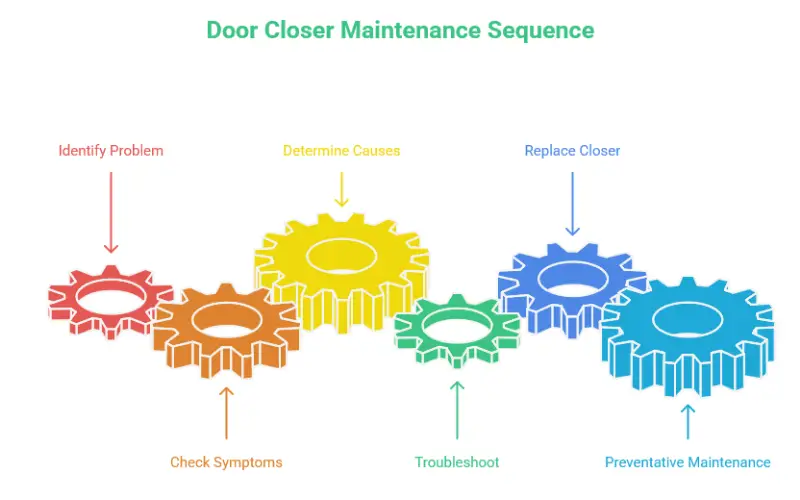
When it comes to commercial door closer repair and replacement; From ensuring privacy to providing sound insulation and reducing energy consumption, door closers play a crucial role in our daily lives. Despite their ubiquitous presence and essential functionality, they don’t get the attention they require until a problem surfaces. In this guide, we will delve deep into some of the most common issues associated with door closers, providing practical solutions, preventative measures, and insightful tips.

II. Understanding the Basics of Door Closer Mechanisms
A. How Door Closers Work
At their core, door closers are hydraulic devices that help control the opening and closing of doors. As the door opens, internal pressure builds within the closer, which is then released to close the door gently and efficiently.
B. Essential Components of Door Closers
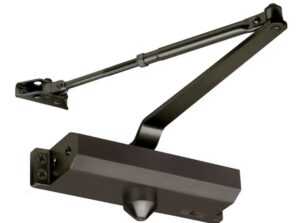
Understanding door close operation entails familiarizing with primary components like the body, arm, adjusting screws (for closing speed, backcheck, and latching), and hydraulic fluid.
C. Types of Commercial Door Closer Repair and Their Common Faults
From surface mounted to concealed and from overhead door closers to regular arm door closers, each variant has its unique set of challenges and common faults.
III. Problem 1: Door Closer Leaks Oil
One of the common calls Advanced Window & Glass Repair, LLC receives related to commercial door closer repair, is oil leaks. A leaking door closer can render it ineffective, causing door operating issues.
A. Understanding the Common Symptoms and Causes
Typically, if your door closer is leaking oil, you may observe a slow or non-responsive door closer action. A damaged o-ring or a loosened adjusting screw can be the culprits.
B. How to Troubleshoot This Issue
Start by checking the adjusting screws. If the issue persists, you may need to replace the o-ring or in severe cases, the entire door closer.
C. Tips for Preventing Future Leaks
Regular maintenance, like checking for loose screws, can effectively prevent future oil leaks.
IV. Problem 2: Door Closer Slams Shut or Does Not Close Fully
Improper door closing can be both annoying and potentially hazardous.
A. Identifying Why a Door Slams or Doesn’t Close Properly
Imbalanced adjusting screws, low hydraulic fluid, or obstructions on the door path are common causes.
B. Practical Methods for Handling Closing Speed Issues
Inspect the swing path and adjusting screws. If necessary, replenish the hydraulic fluid.
C. Preemptive Measures to Avoid Improper Closing
Regularly check your door path and adjusting screws to avoid closing speed issues long-term.
V. Problem 3: Difficulty Opening the Door
An overly stiff door can be a hassle, interfering with the smoothness of day-to-day operations.
A. Recognizing the Signs of a Stiff Door Closer
If your door requires excessive force to open, you’re likely dealing with a stiff door closer.
B. Step-by-Step Guide on Fixing a Hard-to-Open Door
Check the arm and the adjusting screws. If these are not the culprits, consider consulting a professional.
C. Prevention Strategies and Maintenance Tips
Ensure proper commercial door closer installation and regular checks for wear and tear.
VI. Problem 4: Commercial Door Closer Repair- Misalignment Issues
Misalignment issues can disrupt your door’s functionality.
A. Learning the Indicators of a Misaligned Door Closer
Common red flags include an unusual gap between the door and frame, uneven wear on the door edges, and a door that’s hard to lock.
B. Expert Advice on Correcting Commercial Door Closer Repair & Alignment
A complete inspection is necessary, focusing on hinge screws, arm, and door frames for any misalignments.
C. Recommendations on Preventing Misalignment Issues
Regular door checks and immediate corrective action when you notice abnormalities can prevent misalignment issues.
VII. Problem 5: Noise from Door Closers
A door closer producing noise is a sign of an underlying issue needing your attention.
A. Deciphering What Different Noises Might Indicate
Creeks may imply low hydraulic fluid, while knocking noises could hint at misalignment.
B. Walkthrough on Addressing Noise Issues
Identify the source of the noise, then proceed for appropriate corrective action, like topping up hydraulic fluid or aligning the door closer.
C. Advice on Minimizing Future Noise Issues
Maintain a sufficient level of hydraulic fluid and align your door closer as needed.
VIII. Commercial Door Closer Repair & Replacement – Conclusion!
In conclusion, door closers, though often overlooked, play a vital role in our daily lives. Above, we’ve explored common problems and their respective solutions as well as preventive measures. Remember, regular maintenance is key to a well-functioning door closer.
Frequently Asked Questions
Why is my door closer leaking oil?
My door slams shut, what could be the problem?
Why is my door closer making noise?
What causes a door closer to be stiff or hard to open?
How can I align a misaligned door closer?
Sources:
Problem Areas to Watch Out in a Hydraulic Door Closer | by John Smith | Medium