
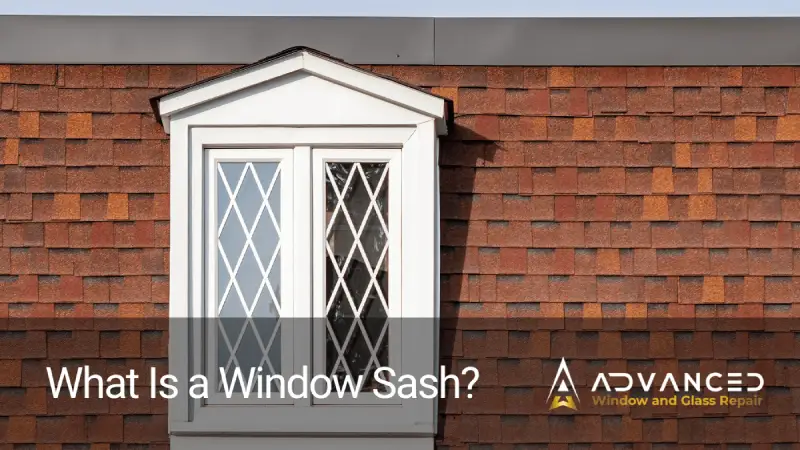
A window sash is the frame that holds the glass pane and sits within the outer window frame. It determines how a window opens, how well it seals, and how long the window performs before hardware or glass failure forces a repair. When a sash sticks, rattles, or lets in drafts, the sash itself is usually the source of the problem rather than the glass or the outer frame.
Advanced Window & Glass Repair handles window repair services in Northern Virginia, DC, and Maryland, and sash-related problems are among the most common service calls the team receives. This guide covers what the sash is, how different types work, and how to decide between repair and replacement.
What Is a Window Sash and Why It Matters
The sash is the inner moving frame of the window. It holds the glass pane in a glazed channel and connects to the balance, spring, or hinge hardware that allows the window to open and close. Without a functioning sash, a window cannot ventilate, seal, or operate correctly.
In double-hung windows, there are two sashes: an upper and a lower. Both can move independently, which allows for ventilation at the top, the bottom, or both simultaneously. In single-hung windows, only the lower sash moves. The upper sash is fixed.
The sash also carries the weatherstripping that creates the seal when the window is closed. When the sash compresses against the frame stop, the weatherstripping on the sash perimeter closes the gap between the moving and fixed parts. A warped or swollen sash breaks this contact. Air passes through regardless of how good the weatherstripping material is.
The balance system is what holds the sash in position when open and controls its movement. Older double-hung windows use rope and pulley counterweights. Modern windows use spiral balances or block-and-tackle systems. Window balance and spring repair is the most common sash-related repair in Northern Virginia properties, particularly in homes with double-hung windows installed in the 1990s and 2000s.
Types of Window Sashes
Different window types use different sash configurations. Understanding which type is installed helps identify the correct repair approach.
Double-hung sash is the most common type in North American residential buildings. Both the upper and lower sash slide vertically within the window frame. Most modern double-hung sashes tilt inward for cleaning access. Hardware failure in double-hung windows most often affects the balance mechanism.
Single-hung sash uses a fixed upper sash with a sliding lower sash. The overall appearance is similar to a double-hung window, but only the lower sash has moving hardware. Repair is simpler because only one set of balances needs to be maintained.
Casement sash is hinged at the side and swings outward when cranked open. It provides a tight seal when closed because the hardware pulls the sash against the weatherstripping under mechanical pressure. Casement sash problems most often involve failed crank mechanisms or damaged hinges rather than balance springs.
Awning sash is hinged at the top and swings outward at the bottom. It allows ventilation even during light rain because the open sash deflects water. Awning hardware problems typically involve the crank arm or the connecting pivot hinges.
Sliding sash moves horizontally within the frame, similar to a sliding glass door on a smaller scale. Dirt in the track and worn rollers are the most common maintenance issues. Residential glass repair covers sash-only replacement for all of the above types across Northern Virginia, DC, and Maryland.
Common Window Sash Problems
Most sash problems fall into one of four categories: hardware failure, wood movement, seal failure, or glass damage.
Hardware failure in double-hung windows usually presents as a sash that falls when opened, will not stay up, or requires significant force to move. Advanced Window & Glass Repair assesses hardware failure across Northern Virginia, DC, and Maryland and carries replacement springs for all common double-hung window types. Spiral balance springs have a service life of 10 to 20 years and are the most frequently replaced sash component in residential properties across the DMV area.
Wood movement causes sash swelling and sticking in timber-framed windows. Wood absorbs moisture during humid months and expands. A sash that works normally in winter but sticks badly in summer is almost always swelling from seasonal moisture uptake. Painting over the sash-to-frame gap with multiple layers of paint also causes binding.
Seal failure at the sash perimeter shows cold air penetration when the window is closed. This can be caused by compressed or torn weatherstripping, a warped sash that no longer sits flat against the stop bead, or a sash that has dropped slightly on its balances and no longer aligns correctly with the frame.
Glass damage within the sash includes cracked panes, failed double-pane IGU seals causing fogging, and broken glass from impact. When the glass inside the sash is the only problem, the sash itself can often be retained and only the glass replaced.
Window Sash Repair vs Replacement
Sash repair is appropriate when the frame is structurally intact and the damage is limited to hardware, weatherstripping, or glass. Replacing a failed balance spring, fitting new weatherstripping to the sash perimeter, or reglazing a cracked pane all restore the window to full function without replacing the sash itself.
Sash replacement is needed when the sash frame has rotted, warped beyond a point where it can be planed straight, or cracked at a corner joint. In timber windows, rot at the bottom rail of the sash (the lowest horizontal member, most exposed to moisture) is the most common reason for sash replacement. Replacing the sash retains the outer window frame. This reduces cost compared to a full window replacement.
Full window replacement, which includes the outer frame, is necessary when the outer frame is also damaged. It is also needed when the window opening size needs to change, or when upgrading from single-pane to double-pane glazing where the existing frame depth cannot accommodate an IGU.
The table below covers the most common decision points:
| Issue | Repair or Replace |
| Failed balance spring | Repair: spring replacement only |
| Worn or torn weatherstripping | Repair: weatherstrip replacement |
| Cracked single pane | Repair: glass-only replacement |
| Fogged double-pane IGU | Repair: IGU replacement in sash |
| Rotted sash bottom rail | Replace: sash-only replacement |
| Warped sash, cannot close fully | Replace: sash-only replacement |
| Rotted outer frame and sash | Full window replacement |
| Single pane, upgrading to double | Full window replacement |
Window Sash Materials Compared
The sash material affects maintenance requirements, thermal performance, and expected service life.
Timber sashes are the original material in most pre-1980 residential properties in the Northern Virginia and DC area. Timber provides good insulation but requires periodic repainting to protect the wood from moisture. A well-maintained timber sash lasts 50 or more years. Neglected timber sashes rot at the base rails and glazing channels within 10 to 15 years.
uPVC sashes are the standard material in replacement windows fitted from the 1990s onward. uPVC requires no painting, resists moisture, and does not rot. The material is less dimensionally stable than timber in wide temperature swings, and corner weld joints can crack after 20 to 30 years. Colour options are limited compared to timber.
Aluminium sashes are common in commercial properties and in slim-profile windows where the frame depth is restricted. Aluminium is durable and corrosion-resistant but conducts heat at the frame, which reduces the window’s overall thermal performance unless a thermal break is included in the frame profile.
Window sash problems including stuck frames, failed balance springs, and drafting seals are among the most common window issues across Northern Virginia, DC, and Maryland. Call (571) 351-3692 or get in touch with Advanced Window & Glass Repair via the contact page to book a same-day assessment and get a straight answer on whether repair or sash replacement is the right call for the specific window.
How to Maintain Your Window Sash Year-Round
Regular maintenance extends sash life and prevents the progressive deterioration that turns a minor adjustment into a costly replacement.
Check balance springs and cords annually in double-hung windows. Open each sash fully and test that it holds position without external support. A sash that slides down when released has a worn or broken balance and should be serviced before it fails completely and causes the sash to drop unexpectedly.
Clean the weatherstripping on the sash perimeter each autumn. Remove accumulated grit and debris from the compressed surface with a damp cloth. Inspect for sections that have torn, compressed flat, or pulled away from the channel. Replace any section that no longer makes contact with the frame stop when the window is closed.
For timber sashes, inspect the paintwork on all four rails twice a year. Any area where paint has cracked, peeled, or lifted is allowing moisture into the wood. Sand back to bare timber, prime, and repaint promptly. The bottom rail is the highest-risk area because it collects condensation and standing water from the sill.
For uPVC sashes, clean the frame channels and pivot hardware with a mild soap solution. Apply a silicone-based lubricant to the pivot pins and tilt-in latch mechanisms annually. Avoid petroleum-based lubricants, which degrade the uPVC surface over time. For guidance on when window maintenance crosses into replacement territory, the U.S. Department of Energy guidance on window replacement covers the performance thresholds at which repair becomes less cost-effective than full window replacement.
Conclusion
The window sash is the working component of the window. It holds the glass, carries the seal, and connects to the hardware that allows the window to open and close. Most window problems, including sticking, rattling, drafting, and hardware failure, originate in the sash rather than the outer frame. In most cases, the sash can be repaired or replaced without removing the full window.
Understanding the type of sash, the material it is made from, and the specific failure point involved determines whether a repair visit or a sash replacement is the right approach. Advanced Window & Glass Repair covers Northern Virginia, DC, and Maryland for all sash-related work from balance spring replacement to full sash-only replacement. For a full reference on the components that make up a window and how they work together, the guide to window parts and their names covers every component from the sill to the head jamb.
Advanced Window & Glass Repair handles window sash repair, balance spring replacement, and sash-only replacement across Northern Virginia, DC, and Maryland. Call or reach out through the contact page to arrange a visit or get a quote on the specific repair needed.
Frequently Asked Questions
What is the difference between a window sash and a window frame?
The window frame is the fixed outer structure built into the wall opening. The sash is the inner movable frame that holds the glass and operates within the outer frame. In single-hung and double-hung windows, the sash slides vertically. In casement windows, it swings on hinges. The frame stays fixed; the sash is what moves and seals. Most operational window problems involve the sash rather than the outer frame.
How do I know if my window sash needs repair or replacement?
If the sash frame is structurally intact, with no rot, no cracked corners, and no warp that prevents it from closing flat, repair is usually appropriate. Replacing a balance spring, weatherstripping, or a cracked glass pane restores function without touching the sash itself. If the sash frame is rotted at the base rail, warped beyond adjustment, or cracked at a corner joint, the sash needs replacement. A professional inspection determines which applies in less than 30 minutes.
Can a window sash be replaced without replacing the entire window?
Yes. Sash-only replacement is a standard repair in both timber and uPVC windows. The new sash is sized to match the existing outer frame and installed with new hardware, weatherstripping, and glass. This costs significantly less than a full window replacement and is the correct approach when the outer frame is in good condition. Sash replacement is particularly common in double-hung timber windows where one or both sashes have rotted at the base rail while the box frame remains sound.
Why does my window sash stick in summer but work normally in winter?
Seasonal sticking is almost always caused by timber sash swelling from moisture uptake during humid months. Wood absorbs water vapour from the air and expands, reducing the clearance between the sash and the frame. The problem reverses in winter when the wood dries out. The long-term fix is to sand the sticking surfaces back to bare wood, prime the exposed grain, and repaint with a quality exterior paint. A short-term fix is to reduce the clearance by planing the sash edge, but without repainting the bare wood the swelling will recur.
How long does a window sash last?
Service life depends on material and maintenance. A well-maintained timber sash with sound paintwork can last 50 or more years. A uPVC sash in normal use typically lasts 20 to 30 years before corner joints and hardware begin to fail. Aluminium sashes last as long as the frame and hardware, typically 25 to 40 years in residential use. The sash usually outlasts the glass unit it contains, meaning IGU replacement is the more common repair before sash replacement becomes necessary.


