
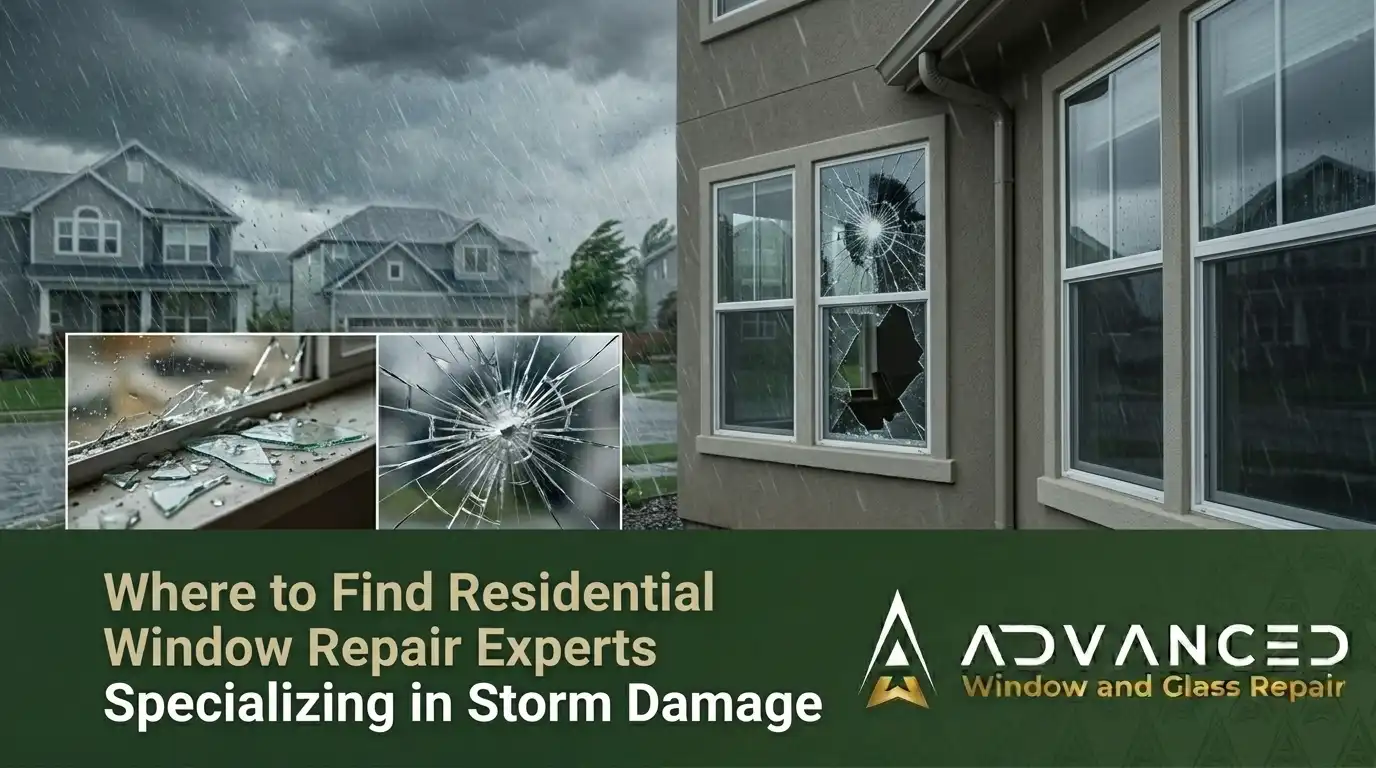
Storms in Northern Virginia, Maryland, and Washington DC hit fast. Hail, derecho winds, and summer thunderstorms can shatter window panes, crack frames, and break IGU seals within minutes. Most homeowners call the first window company they find.
That approach often leads to inflated scopes, unnecessary replacements, and long delays. Working with a licensed local specialist like the window glass repair team in Woodbridge, VA produces faster assessments and more accurate scopes than calling an out-of-area company.
Advanced Window & Glass Repair has handled residential storm damage across Northern Virginia, Maryland, and DC since 1999. This guide covers how to find and vet the right expert before calling anyone.
What “Storm Damage Specialist” Actually Means for a Window Company
Not every glass company is equipped to handle storm damage work. A general window contractor can replace a broken pane. A storm damage specialist does more than that. The key difference is in the scope and the process.
Storm damage jobs require a full assessment of the frame, seals, sash, and surrounding structure. A single storm event can cause visible glass breakage, hidden frame stress, and secondary moisture damage from a failed seal. A specialist documents all three. A general contractor may miss the last two entirely.
Storm damage specialists also know how to price and present repair scopes that hold up to adjuster review. They photograph damage in a specific sequence. They write line-item estimates that identify each component separately. They attend the adjuster inspection and answer technical questions in real time.
The most capable storm damage window companies in the DMV carry NGA certification. The National Glass Association sets the technical standards for glass repair, fabrication, and installation. NGA-certified technicians have passed competency testing. Their work meets the standards adjusters look for when evaluating a submitted repair scope.
Credentials That Separate Storm Damage Experts from General Contractors
The minimum requirements are state licensing and liability insurance. Every residential glass contractor in Virginia, Maryland, and Washington DC must hold an active state license. A contractor who cannot provide a license number on request should be removed from consideration.
NGA certification is the next standard to look for. It is not required by law, but it matters in practice. NGA-certified companies follow published standards for glass selection, installation method, and safety. Those standards apply directly to storm damage repair work. When an adjuster receives a scope from an NGA-certified contractor, the line items carry more weight.
Insurance claim experience is the third qualification. A company may hold a license and an NGA certification and still have no idea how to prepare a claim-ready scope. Ask specifically whether the company has prepared adjuster-ready repair scopes before. Ask what their damage record looks like. The answer reveals whether the company has real storm damage experience or is learning the process on the job.
Advanced Window & Glass Repair is NGA-certified and has prepared insurance-ready scopes for storm damage jobs across the DMV for more than 25 years. The repair scope format the team uses follows NGA standards and covers every component the adjuster needs to approve the claim. Homeowners can review residential glass repair services in the DMV to understand what a fully credentialed contractor brings to a storm damage assessment.
Storm Damage Patterns in Northern Virginia, Maryland, and DC
The DMV area experiences five overlapping severe weather seasons. The peak glass damage window runs from late spring through early fall. Northern Virginia recorded more than 6,000 hailstorm events and 19,000 damaging wind events between 1950 and 2025, according to National Weather Service storm data. Most glass damage in the region falls into four categories.
Hail impact is the most common source of direct glass breakage. Hailstones larger than one inch shatter standard double-pane glass and crack tempered units. Significant hail events occur several times per summer across Northern Virginia and Maryland. The heaviest months are May, June, and July.
High winds from thunderstorms and derechos are the second most common cause. Derecho events cross Northern Virginia and Maryland multiple times each decade. Wind-driven debris such as branches, fence panels, and roof materials breaks glass at angles that cause secondary frame damage the homeowner may not notice until water enters the wall.
Hurricane remnants and tropical storms account for the third category. Late summer and fall tropical systems regularly reach the DMV area as tropical depressions or post-tropical storms. Rain volume and wind from these events can overwhelm failed seals and drive water into the wall cavity.
Window seal failures from rapid pressure changes make up the fourth category. A storm does not have to break a pane outright to damage the seal. Rapid barometric pressure shifts during severe storms can push IGU seals to failure. The result appears as fogging or condensation between panes within days of the storm event.
The team providing glass repair and replacement across Northern Virginia understands each of these damage types and responds with specific repair methods matched to the cause.
Red Flags to Avoid When Hiring After a Storm
Storm events bring storm chasers. These are out-of-area contractors who move into a neighborhood after a major weather event, knock on doors, and push for fast contract signing and full window replacement. Identifying them is straightforward with a few checks.
Ask for the company’s state license number and verify it online. Virginia, Maryland, and DC all maintain public contractor license databases. A company without an active license in the state where the work occurs is operating illegally. No legitimate contractor will object to providing a license number.
Ask whether the company is based in the DMV area. Local companies have local references, permit history, and a physical service address. An out-of-state company with a temporary local number cannot be held accountable after the crew leaves.
Ask for an itemized estimate, not a single-line total. Storm chasers often produce round-number estimates that do not break down labor, materials, and disposal separately. An adjuster will reject or reduce a vague estimate. A qualified storm damage specialist provides line-item pricing for each component without being asked.
Watch for pressure to sign before the adjuster visit. Repairs should not begin until the insurance adjuster has inspected the damage and approved the scope. A contractor who pushes to start work immediately may not understand the claim process or may be trying to avoid adjuster review of their pricing.

Steps to Take Before Calling a Window Repair Company
The first step is safety. If a window is fully shattered and the opening is exposed, keep the area clear of broken glass. Do not attempt to remove glass fragments from a large opening without proper gloves and eye protection.
The second step is documentation. Photograph all visible damage before anything is moved or cleaned up. Capture the exterior glass from multiple angles. Photograph the interior side of the window from inside the room. Note any frame displacement, sill damage, or water entry. Date and timestamp all photographs. This record is critical for insurance claim purposes.
The third step is temporary weatherproofing. A heavy-duty tarp or plastic sheeting over a shattered opening keeps rain and debris out until the repair company arrives. This step protects against secondary water damage. It is covered as a temporary repair under most homeowners policies. Keep receipts for any materials purchased.
The fourth step is contacting a licensed local window repair company before calling the insurance carrier. A pre-adjuster assessment from a qualified contractor creates an independent damage record. That record becomes the baseline document for the entire claim. Reviewing home glass repair services near you is a starting point for identifying local, licensed, and NGA-certified contractors across the DMV.
Advanced Window & Glass Repair provides same-day storm damage assessments throughout Northern Virginia, Maryland, and DC. The team delivers pre-adjuster documentation at no additional charge for every residential glass job.
Homeowners in Northern Virginia, Maryland, and Washington DC with storm window damage can call (571) 351-3692 for a same-day assessment. Itemized estimates in adjuster-ready format are provided at no additional charge. Contact us online to submit damage photos and schedule a pre-adjuster inspection visit.
How to Compare Storm Damage Window Repair Estimates
Two to three estimates is the right range for storm damage repair jobs. One estimate is not enough to establish whether the pricing is fair. Four or more creates delays that can complicate the insurance claim timeline.
When comparing estimates, look at structure first. Each estimate should list glass units, labor, disposal, and any secondary work as separate line items. An estimate showing only a total figure should be set aside until the contractor provides a full breakdown.
Look at the repair scope next. A storm damage specialist assesses each window individually. The estimate should identify the damage type, the recommended repair method, and the parts for each window. Language like “window repair” or “glass work” with no further detail is not sufficient for claim purposes.
Check whether emergency boarding is included. If any windows required temporary tarping after the storm, that work should appear as a separate line item. It qualifies as a covered temporary repair and should not be merged into the main repair total.
Verify that the labor rate reflects local market conditions. DMV labor rates for residential glass work in 2026 run roughly $75 to $150 per hour depending on job complexity. An estimate well below that range may reflect cut corners on materials or labor.
What the Repair Process Looks Like With a Specialist
A qualified storm damage specialist follows a clear process from the first call through repair completion.
The first step is the field assessment. The technician inspects all affected windows, documents damage from multiple angles, and identifies any frame or structural concerns beyond the glass. This visit typically happens the same day the homeowner calls.
The second step is scope preparation. The specialist writes an itemized repair scope based on the field assessment. This scope lists each component, the repair method, parts, labor, and disposal costs. The scope is formatted for adjuster review from the start.
The third step is the adjuster meeting. The specialist attends the insurance inspection and presents the scope in person. A technician on-site can answer adjuster questions immediately. This eliminates delays and reduces the need for follow-up inspection visits.
The fourth step is repair scheduling. Once the insurer approves the scope, the specialist orders materials and books the job. For standard double-pane IGU replacements in the DMV, parts typically arrive within two to five business days. Most residential glass repairs are completed the same day parts arrive.
The National Weather Service Baltimore/Washington office at weather gov tracks active storm events across Northern Virginia, Maryland, and DC. Homeowners can monitor it for severe weather warnings before the next storm season.
Conclusion
Finding a residential window repair expert who specializes in storm damage comes down to three factors: credentials, experience, and process. State licensing and NGA certification confirm minimum standards. Documented insurance claim experience confirms the company can work a storm damage job correctly. A repair-first approach confirms the company will advocate for the homeowner rather than the easiest sale.
Advanced Window & Glass Repair brings all three to every storm damage job across Northern Virginia, Maryland, and DC. Homeowners dealing with a storm-related insurance claim can also read the companion guide to residential window repair companies that handle insurance claims, which covers the full documentation and adjuster process in detail.
Advanced Window & Glass Repair serves Northern Virginia, Maryland, and Washington DC for all residential storm damage window repair and replacement jobs. Call (571) 351-3692 for a same-day storm damage assessment. Contact us online to submit damage photos and schedule a pre-adjuster inspection. NGA-certified technicians respond to storm damage calls throughout the DMV, and most standard glass repairs are completed the same day parts arrive.
Frequently Asked Questions
1. How do I know if a window repair company has real experience with storm damage in Virginia or Maryland?
Ask for NGA certification, an active state license in Virginia, Maryland, or DC, and a sample adjuster-ready scope. Companies with real storm damage experience answer all three without hesitation. Check Google reviews for specific mentions of insurance claims, adjuster meetings, and approval timelines.
2. What should I do in the first hour after storm damage to my windows?
Keep the area clear of broken glass and photograph all visible damage from multiple angles before touching anything. Date and timestamp every photo. Cover open windows with plastic sheeting to block water entry. Call a licensed local contractor before the insurer to create an independent damage record.
3. How long does storm damage window repair take from the initial call to completed repair in Northern Virginia or Maryland?
Without a claim, a single broken double-pane window is typically assessed and repaired within one to two weeks. With a claim, the full process runs four to eight weeks, depending on adjuster scheduling and parts availability in the DMV. Emergency boarding happens immediately without waiting for claim approval.
4. Can a storm damage specialist repair a cracked window without replacing the whole unit?
In most cases, a cracked double-pane unit requires replacing only the IGU within the existing frame, not the entire window. If the frame is structurally intact, full replacement is not warranted. A qualified specialist confirms the right repair approach during the field assessment before any work begins.
5. What is the difference between a storm damage window repair expert and a general glass company?
Storm damage experts document damage for insurance review, write itemized adjuster-ready scopes, and attend adjuster inspections in person. General glass companies provide single-line estimates and rarely join adjuster visits. NGA certification and documented claim experience are the two key differentiators.
6. How many estimates should I get for storm damage window repair before choosing a contractor?
Two to three estimates is the right range for storm damage window repair. One is not enough to verify fair pricing, and four or more creates delays that complicate the insurance claim. Compare scope structure over total price, since a lower number may reflect a narrower scope that misses covered damage.


