
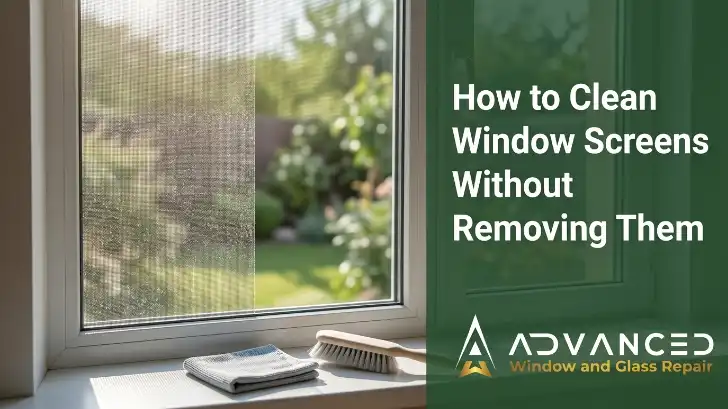
Window screens do a quiet but important job: they filter insects, debris, and airborne particles while letting air circulate freely. Over time, dust, pollen, and grime build up in the mesh and reduce both airflow and indoor air quality. The good news is that screens do not need to be removed to be cleaned effectively. Advanced Window & Glass Repair, a trusted residential glass repair company across Northern Virginia, walks through the full process here, from the right tools to when cleaning alone is no longer enough.
Why Cleaning Window Screens Is Important
Window screens act as the first filter between outdoor air and the interior of a home. That filtering role makes them highly effective at trapping what comes through, including pollen, dust, mold spores, and fine particulates. Left uncleaned, that build-up creates problems that extend beyond a blocked view.
Dust and Pollen Reduce Airflow
Screens are designed to allow air to move through freely. A layer of accumulated dust and pollen across the mesh reduces the effective open area of the screen and slows airflow into the room. The result is a room that feels warmer, stuffier, and less ventilated than it should be, even with the window open.
Trapped Allergens Re-Enter the Home
Pollen from trees, grasses, and flowering plants is windborne and accumulates on screens throughout spring and summer. When the window is opened or a breeze passes through, a portion of those trapped particles enters the home. Regular cleaning removes the accumulation before it has a chance to affect indoor air quality.
Dirty Screens Accelerate Mesh Degradation
Dirt particles are abrasive. Over time, trapped grime works against the mesh fibres and weakens the screen structure at a microscopic level. A screen that is cleaned regularly will outlast one that is left dirty by several years, particularly in environments with high dust or pollen loads.
The Right Cleaning Tools for In-Place Screen Cleaning
Gathering the right tools before starting makes the process faster and reduces the risk of damaging the mesh. In-place cleaning does not require specialised equipment, but having the correct items on hand matters.
Vacuum cleaner with a brush attachment. A soft-bristle brush attachment removes loose surface dust without pressing dirt further into the mesh. This is always the first step before any liquid cleaning.
Microfiber cloth. Microfiber is ideal for wiping screen surfaces because the fibres trap dust rather than pushing it around. Standard cotton cloths are less effective and can leave lint behind.
Soft-bristle brush. A dedicated soft brush, such as a clean paintbrush or a soft toothbrush for corners, handles areas the vacuum cannot reach, particularly around the frame edges.
Spray bottle with cleaning solution. A spray bottle gives precise control over the amount of liquid applied. Over-wetting a screen risks water running into the frame channel and damaging the surrounding sill or interior sash.
Mild dish soap and warm water. This is the standard cleaning solution for most window screens. No specialised screen cleaning products are required for routine maintenance.
Which Screen Types Can Be Cleaned In Place?
Most common residential window screens can be cleaned without removal. Understanding the characteristics of each type helps determine the appropriate cleaning pressure and technique. Homeowners across the region can get a condition assessment through the glass repair services team at Advanced Window & Glass Repair.
Fiberglass Mesh Screens
Fiberglass is the most common window screen material in residential properties. It is flexible, resistant to corrosion, and tolerates gentle cleaning methods well. Fiberglass screens can be wiped, brushed, and lightly rinsed in place without risk of damage, provided excessive water pressure is avoided.
Aluminium and Metal Mesh Screens
Aluminium mesh is more rigid than fiberglass and resists tearing under light pressure. It can be cleaned in place using the same methods as fiberglass, with one additional consideration: aluminium can crease or dent if scrubbed with force. Gentle wiping strokes in one direction produce the best result.
Solar and Insect Screens
Heavier-duty screens such as solar-shade screens or fine-mesh insect barriers require a lighter touch. The tighter the mesh weave, the more it traps fine particles but also the more easily it can be damaged by pressure cleaning. For these screens, vacuum suction and damp cloth wiping are more appropriate than spray rinsing.
Quick Screen Check Before You Start
A brief inspection before cleaning prevents the cleaning process from making existing damage worse. A damaged screen cleaned in place can be stretched further, or moisture can enter areas where the mesh has already separated from the frame.
- No tears or loose corners: Check the mesh for any shredding or separation from the frame edge. A screen with visible tears should be repaired before cleaning, as moisture and brush contact will enlarge the damage.
- Frame is securely seated: Confirm the frame sits firmly in the window channel. A loose frame will shift during cleaning and may fall out, particularly on upper floors.
- Mesh not brittle or sagging: Older screens, especially fiberglass that has been exposed to prolonged UV, can become brittle. Pressing on the mesh with a finger should produce a slight flex, not cracking or powdering. A screen that is brittle will not survive wet cleaning.
Screens that fail this check are better repaired or replaced before cleaning proceeds.
Most Efficient Techniques to Clean Window Screens While Keeping Them Installed
This four-step process works for fiberglass, aluminium, and standard insect screens. Advanced Window & Glass Repair recommends this sequence for all in-place cleaning jobs as it removes the maximum amount of debris with the lowest risk of screen damage.
Step 1: Remove the Top Layer of Dry Dust
Before any liquid is applied, remove loose dry dust with a vacuum brush attachment. Work from top to bottom in slow, overlapping passes. Finish with a dry microfiber cloth wiped gently across the mesh surface. Removing dry dust first prevents dirt from turning to mud when liquid is applied.
Step 2: Apply the Cleaning Solution
Mix a few drops of mild dish soap into warm water in a spray bottle. Mist the screen surface lightly, working in sections. The mesh should be damp, not saturated. Use a soft microfiber cloth or a soft brush to work the solution gently across the mesh in a single direction. Circular scrubbing motions risk distorting the mesh weave.
Step 3: Rinse Lightly
Once the cleaning solution has been worked across the screen, wipe the mesh with a second cloth dampened with clean water to remove soap residue. A light mist from a clean spray bottle is also sufficient. The goal is to remove soap film without soaking the frame channel or the interior sill below the window.
Step 4: Allow to Air Dry Fully
Keep the window open after cleaning to allow airflow across the screen surface. Do not close the window until the mesh is completely dry to the touch. Trapping moisture against the mesh or the frame can encourage mould growth at the frame edges and accelerate corrosion in aluminium frames.
Cleaning Tips for Allergy Sufferers
For households where one or more occupants manage allergies or asthma, window screen cleaning has a direct health benefit that goes beyond aesthetics. The approach requires a few adjustments to protect the person doing the cleaning.
Clean screens early in the morning or in the evening, when outdoor pollen counts are typically lower. Cleaning during peak pollen hours, usually mid-morning to early afternoon, risks reloading the screen with fresh pollen while the cleaning is still in progress.
Wearing a basic dust mask and disposable gloves during the vacuuming and dry-dust step reduces direct inhalation of disturbed particles. This is particularly relevant in spring, when tree and grass pollen counts are highest in Northern Virginia.
Prioritise screens in living rooms, bedrooms, and home offices, as those rooms accumulate the most exposure hours. Cleaning screens in high-use rooms before pollen season peaks provides the longest period of improved air quality before the next cleaning is needed.
Window screens showing signs of damage or heavy build-up that will not clean out may need professional attention. Call (571) 351-3692 or visit the contact page to book a window inspection across Northern Virginia.
What Not To Use on Window Screens
Using the wrong cleaning materials can cause damage that cleaning was meant to prevent. These materials should not be used on any standard window screen.
Stiff or wire brushes. Metal bristles and hard plastic scrubbers apply concentrated pressure to the mesh and will bend, tear, or permanently distort the weave. Once a mesh is deformed, it cannot be straightened.
Pressure washers or high-pressure hose nozzles. High water pressure forces mesh fibres apart and can push the screen out of its frame channel. Even aluminium mesh, which is relatively robust, will deform under sustained water pressure.
Bleach-based cleaners or harsh chemical sprays. Bleach degrades fiberglass mesh fibres over multiple applications and causes aluminium to pit and corrode. Solvent-based sprays can dissolve the adhesive that bonds mesh to the frame on older screen units.
Abrasive cloths or scouring pads. Rough-textured materials scratch fiberglass mesh and create the same abrasive damage as dirt, accelerating the ageing process rather than countering it.
How Northern Virginia’s Climate Affects Window Screen Maintenance
Northern Virginia sits in one of the highest pollen-load regions in the United States. Tree pollen peaks in March and April, grass pollen follows in May and June, and weed pollen extends into September. For households that keep windows open during these periods, screens accumulate a visible pollen coating within days, not weeks.
Summer humidity compounds the issue. Damp air causes pollen and dust particles to bind more firmly to mesh fibres, making dry-vacuum removal less effective and requiring wet cleaning more frequently. By contrast, the drier air of autumn and winter means screens accumulate less sticky debris and dry faster after cleaning.
The region’s occasional summer storms deposit airborne soil particles and organic material on screens at a rate that routine cleaning cannot always keep up with. A post-storm screen check and light rinse is good practice after any heavy weather event.
Seasonal Window Screen Cleaning Checklist
| Season | Task | Purpose |
|---|---|---|
| Spring | Full vacuum and wet clean | Remove tree pollen build-up before allergy season peaks |
| Summer | Light rinse after storms | Clear post-storm debris and maintain airflow |
| Fall | Full vacuum and dry wipe | Clear leaf debris and prepare for closed-window months |
| Winter | Visual inspection only | Check for frame damage or mesh brittleness from cold |
How Often Should You Clean Window Screens?
Cleaning frequency depends on location, pollen exposure, and how often windows are kept open. For most Northern Virginia homes, a full clean twice a year (spring and autumn) maintains acceptable screen condition.
Households in heavily treed areas or near construction sites benefit from quarterly cleaning. Fine dust from earthworks and tree pollen from dense canopy cover loads screens faster than in open suburban settings.
Allergy-affected households should aim for monthly cleaning during peak pollen season, which runs from March through September in Northern Virginia. A monthly clean during this period removes the pollen accumulation before it re-enters the home in significant quantities.
How Cleaning Extends the Life of Window Screens
A screen that is cleaned regularly will outlast a neglected one by years. The mechanism is straightforward: accumulated debris is abrasive, and abrasion degrades mesh fibres over time.
Dirt particles trapped in the mesh flex with the screen in wind. That repeated flexing against embedded grit wears the fibre at the contact point. In fiberglass screens, this manifests as gradually weakening areas that eventually tear under normal wind pressure. In aluminium screens, it accelerates surface corrosion.
Frame life is also extended by regular cleaning. Moisture trapped in dirty mesh sits against the frame channel and promotes corrosion in aluminium and rot in timber frames. A clean, dry screen reduces this risk significantly.
When Cleaning Is Not Enough: Signs a Screen Needs Repair or Replacement
Cleaning restores a screen to working condition, but only when the underlying structure is sound. Some screens have deteriorated past the point where cleaning provides any benefit.
Visible mesh tears or holes. Any opening in the mesh defeats the screen’s primary purpose. Small tears can be patched with a screen repair kit, but tears longer than a few centimetres across a high-traffic window are better addressed with a full re-mesh.
Mesh pulling away from the frame. The mesh is held in the frame by a rubber spline pressed into a channel around the perimeter. When this spline ages and shrinks, the mesh pulls inward from the edges. Cleaning will not restore the tension, and a screen in this condition will continue to sag until re-splined or replaced.
Bent or warped frame. A frame that is no longer square will not seat correctly in the window opening and allows gaps around the edges. These gaps make the screen’s insect barrier function ineffective regardless of how clean the mesh is.
Mesh that is brittle or discoloured. Fiberglass mesh that has been exposed to UV for many years loses elasticity and turns from grey or black to a chalky, faded appearance. A screen in this condition will crack under the light pressure of cleaning. Replacement is the only practical option.
The US EPA’s Indoor Air Quality resource covers the relationship between building envelope maintenance, ventilation, and indoor pollutant levels, providing useful context for homeowners deciding how much attention to give their window screen maintenance routine.
Conclusion: Maintaining the Freedom of a Screen
Clean window screens improve airflow, reduce allergen load, and extend the operational life of the screen itself. The process does not require screen removal, specialist products, or more than 20 minutes per window once the right technique is understood.
Advanced Window & Glass Repair provides screen repair, re-meshing, and full window service across Northern Virginia for screens that have moved beyond what cleaning can address. For homeowners also dealing with damaged screen frames, the guide on repairing a bent window screen frame covers whether repair or replacement is the more practical solution.
Advanced Window & Glass Repair serves residential and commercial clients across Northern Virginia, Maryland, and Washington DC with window repair, screen servicing, and glass replacement. Call (571) 351-3692 or visit the contact page to book a service today.
Frequently Asked Questions
1. How often should window screens be cleaned in Northern Virginia given the region’s high pollen counts?
Northern Virginia consistently ranks among the highest pollen-load areas in the eastern United States, with tree, grass, and weed pollen seasons running from early March through late September. For most homes in the region, cleaning window screens twice a year (once in late spring after the main tree pollen peak and once in autumn before windows are closed for winter) maintains acceptable conditions.
Households with allergy sufferers or those in heavily treed areas will benefit from monthly cleaning during the March through September window. At this frequency, screens do not accumulate enough pollen to significantly affect indoor air quality between cleanings.
After major storm events, a light rinse and wipe is worthwhile regardless of the cleaning schedule. Northern Virginia summer storms deposit airborne soil and organic matter on screens quickly, and leaving this build-up in place allows it to bind to the mesh as it dries, making the next scheduled cleaning harder.
For households that keep windows open year-round, quarterly cleaning is a reasonable minimum. For those that close windows through the winter months, the spring cleaning becomes the most important session of the year, as it removes all the pollen and debris accumulated since the previous autumn before the screen is used heavily again.
2. What is the best homemade cleaning solution for window screens, and are commercial screen cleaners worth using?
A simple mixture of warm water and a few drops of mild dish soap is the most effective and safest cleaning solution for standard fiberglass and aluminium window screens. The mild surfactant in dish soap loosens dust and pollen from the mesh fibres without degrading either the fibreglass or the aluminium. This solution costs almost nothing and works as well as any commercial screen cleaning product on the market.
Commercial screen cleaners exist but provide no meaningful benefit over a dish soap solution for routine residential maintenance. Many commercial products contain fragrance chemicals and surfactants that leave a residue on the mesh, which can actually attract dust more quickly than a clean screen.
The important principle is dilution: the soap should be barely detectable by smell in the water. Too much soap creates excess foam that is difficult to rinse from the mesh and leaves a film when dry.
For screens with heavy organic build-up, such as screens that have accumulated mould or algae in damp conditions, a diluted white vinegar solution (one part vinegar to four parts water) applied before the soap wash will break down organic matter more effectively. Vinegar is safe on both fiberglass and aluminium and rinses cleanly with water.
Avoid bleach-based products for routine screen cleaning. While bleach kills mould effectively, repeated application degrades fiberglass mesh fibres and accelerates corrosion on aluminium frames, shortening the screen’s service life.
3. Can cleaning window screens in place cause them to fall out of the frame, and how can this be prevented?
Screen frames sit in a channel around the window opening and are held by the tension of the fit, plus small plastic clips or retaining tabs depending on the window type. In-place cleaning does not typically dislodge a well-fitted screen, but loose or older screens are more vulnerable to movement during cleaning.
The risk increases when excessive water is used, which adds weight to the screen and lubricates the frame channel, reducing friction. A screen that is already fitting loosely will move more readily when wet weight is added to it.
To prevent the screen from shifting during cleaning, press firmly on the frame at two opposing corners with one hand while wiping with the other. This keeps the frame seated against the channel while pressure is being applied. Avoid pushing directly on the mesh centre, as this deflects the mesh inward and can separate it from the spline.
Before starting, check that all retaining clips or tabs on the frame are engaged. If the frame has visible play in the channel when pushed gently, the screen should be re-tensioned or the clips replaced before cleaning. A screen that drops from the window during cleaning on an upper floor creates a hazard below.
4. How do window screens affect indoor air quality, and does cleaning them make a measurable difference?
Window screens trap a substantial portion of the airborne particles that would otherwise enter the home through an open window. Pollen grains, dust particles, fine soil, and insect debris all accumulate on the mesh over time. When screens are heavily loaded, two problems occur: the screen becomes a source of particles itself, releasing trapped pollen back into the room when air movement across it increases, and reduced airflow concentrates indoor pollutants by limiting the fresh air exchange rate.
Cleaning screens removes the accumulated allergen load and restores the airflow rate through the window. For households where one or more occupants have pollen allergies or asthma, this has a practical health impact. Pollen counts inside homes with dirty screens during spring can be meaningfully higher than in homes with clean screens, simply because the screen is releasing particles that were trapped weeks earlier.
The improvement from cleaning is most noticeable in the first week after a spring clean, when pollen counts are peaking. A freshly cleaned screen filters effectively rather than acting as a secondary source of particles. Consistent cleaning through the allergy season maintains this benefit.
5. What is the correct way to dry a window screen after in-place cleaning to prevent water damage to the frame and sill?
The key is airflow, not heat. After rinsing the screen, keep the window fully open to allow air to circulate across both faces of the mesh. A screen left in still indoor air, particularly a fiberglass screen, will take significantly longer to dry and may develop water marks if soap residue was not fully rinsed.
Do not use a hair dryer or fan heater to accelerate drying. Concentrated heat warps plastic splines and can distort fiberglass mesh. A household fan placed to blow air toward the window from inside is a safe way to speed drying in still conditions.
Check the frame channel after cleaning, particularly at the bottom corners. Water collects in the lowest point of the channel and can sit there for hours if not addressed. A dry cloth pressed into the corner from outside will wick this water out and prevent it from soaking into a timber sill or corroding an aluminium frame track.
The screen is fully dry when the mesh returns to its normal colour uniformly, with no darker damp patches visible. Do not close the window until this point. Closing the window while the screen is still damp traps moisture between the screen and the glass, which can promote mould growth on the sill and lower frame area over time.
6. At what point should a window screen be replaced rather than just cleaned?
Cleaning extends screen life significantly, but there are specific conditions that indicate a screen has reached the end of its useful life and should be replaced rather than maintained.
The clearest indicator is structural failure: tears or holes in the mesh, mesh pulling away from the frame spline along one or more edges, or a frame that has been bent out of square. None of these conditions are resolved by cleaning. A torn screen still allows insects and debris to pass through regardless of how clean the mesh is, and a warped frame will not seat correctly in the window opening.
Physical condition of the mesh fibres is the second indicator. Fiberglass mesh that has faded from its original colour to a chalky grey or white has lost significant tensile strength from UV degradation. This mesh will crack and fragment under normal cleaning pressure. The practical test is to press lightly on the mesh with one finger: healthy fiberglass flexes smoothly, degraded fiberglass cracks or feels rigid in a way that suggests it will break.
Aluminium screens corrode at the frame-to-mesh junction over time, particularly in humid environments. Visible white powdering along the frame edges combined with mesh that feels stiff and discoloured indicates corrosion-related degradation that cleaning will not reverse.


