
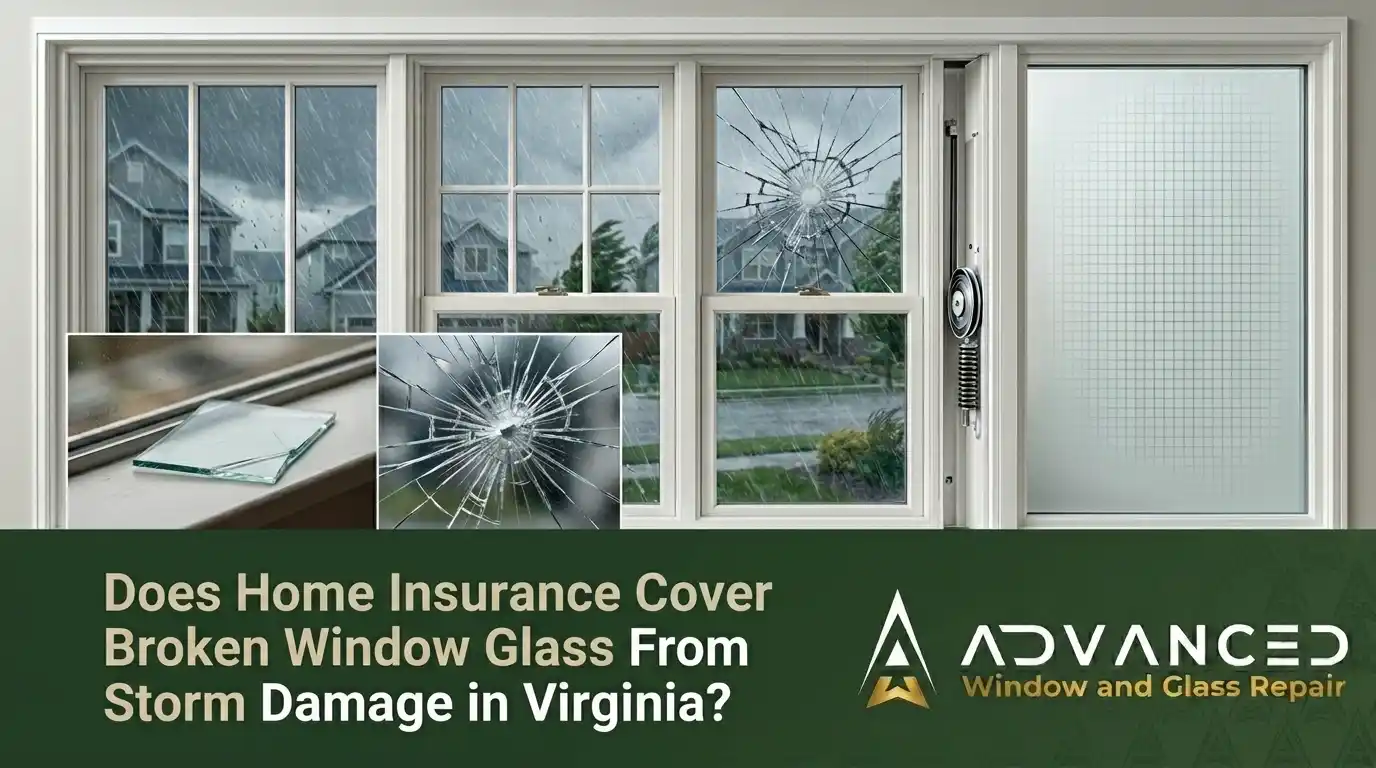
A summer storm sends a branch through the glass, and the repair bill looms. Does home insurance cover broken window glass from storm damage in Virginia? In most cases the answer is yes, as long as a covered storm caused the break. The catch is the deductible, which often exceeds the cost of a single window.
Advanced Window & Glass Repair fixes storm glass across the region, with glass repair across Northern Virginia for homes statewide. This guide covers what is included, what is not, and the smart way to handle a claim. None of this is insurance advice, and the policy itself always controls.
The Short Answer: Storm-Broken Windows Are Usually Covered
Standard homeowners policies cover sudden storm damage to windows. Wind, hail, hurricanes, and falling trees are all named perils. A window broken by any of these is normally covered.
The payout depends on the deductible and the cause. Insurance pays only after the deductible is met, and only for sudden events. Gradual deterioration and ordinary wear are never covered.
Virginia adds a twist with its wind and hail deductibles. Those deductibles determine whether a claim is even worth filing. The sections below break it all down.
Which Storm Damage Does Home Insurance Actually Cover?
Most storm damage to glass qualifies under covered perils. Advanced Window & Glass Repair sees these claims after every major Virginia storm. The damage simply has to come from a sudden, identifiable event.
Wind, Hurricanes, and Fallen Trees
Windstorms are the most frequent cause of covered glass damage. High winds, tropical storms, and hurricanes all qualify. A tree limb thrown through a window during a storm is covered too.
Virginia sees this often, from Hampton Roads hurricanes to Northern Virginia derechos. A sudden, weather-driven break is a textbook covered claim. Fast emergency glass repair protects the home while the claim proceeds.
Hail and Flying Debris
Hail fractures and shatters glass during severe storms. Standard policies treat hail as a covered peril. The Shenandoah Valley and central Virginia see regular hail events.
Flying debris produces similar damage in high winds. Gravel, branches, and loose objects all break glass. Insurance covers these impacts when a storm drives them.
Dwelling vs Personal Property Coverage
Two parts of a policy can apply after a storm. Dwelling coverage pays for the window itself, since it is part of the structure. This is the main coverage for broken glass.
Personal property coverage handles belongings damaged by the break. Rain or glass that ruins furniture or electronics may qualify. Both are subject to the deductible.
What Storm Window Damage Is NOT Covered?
Insurance covers sudden events, not gradual deterioration. Several common problems fall outside storm coverage entirely. Knowing them prevents a denied claim and wasted time.
Wear, Age, and Seal Failure
Old, rotting, or poorly maintained windows are not covered. Insurers categorize that damage as a maintenance issue. A storm does not turn a worn-out window into a covered claim.
A foggy pane is the classic example. Moisture between the panes signals a failed seal, the focus of professional double-pane glass repair. The cause is age rather than weather, so that repair always falls on the homeowner.
Flood Damage
Standard home insurance excludes flood damage. A window broken by rising floodwater needs separate flood coverage. Wind-driven rain through a storm-broken window is treated differently.
The distinction matters in a heavy Virginia storm. Damage from wind is usually covered, while damage from flooding is not. A separate flood policy fills that gap.

How Virginia’s Wind and Hail Deductibles Change the Math
Virginia is one of the states that allow separate wind deductibles. Many policies carry a wind or hurricane deductible based on a percentage of the home’s value. That percentage usually runs 1 to 5 percent.
The financial impact is considerable. A 2 percent deductible on a $400,000 home equals $8,000. A single broken window costs far less than that, so the claim pays nothing.
These deductibles are common in Hampton Roads and coastal areas. A wind deductible can trigger from a thunderstorm, a tropical storm, or a hurricane. Checking the policy for this clause is essential before filing.
A storm just shattered a window? A fast repair stops water and weather damage while the insurance question gets sorted. Call (571) 351-3692 or reach out through the contact page for same-day storm glass service across Northern Virginia.
Should You File a Claim or Pay Out of Pocket?
A covered claim is not always the correct decision. When the repair costs less than the deductible, filing pays nothing and still counts as a claim. Advanced Window & Glass Repair often finds the repair is cheaper than the deductible itself.
Filing small claims can also increase future premiums. The table below shows when each path usually makes sense.
| Situation | Usual best move |
|---|---|
| Single window, cost below deductible | Pay out of pocket |
| Several windows damaged in one storm | File one claim for the event |
| Major structural and glass damage | File a claim |
| Foggy or worn glass, no storm | Pay; not a covered claim |
| Repair cost just above deductible | Weigh the premium impact first |
Knowing the repair cost first clarifies the decision. A written estimate, compared against the deductible, answers it quickly. Professional window repair starts with that exact figure.
How to File a Storm Window Damage Claim in Virginia
A successful claim begins with documentation. Photos of the damage, the date, and the weather event all support the file. Notes on what broke and how to help the adjuster.
The next step is contacting the insurer and getting a professional estimate. An adjuster then inspects the damage and confirms the payout. Keeping receipts and estimates speeds reimbursement.
Independent guidance helps as well. FEMA’s Ready.gov covers [documenting and insuring property] before a disaster. That resource explains insurance review, records, and claim readiness clearly.
How to Document Storm Window Damage for a Claim
Strong documentation decides how smoothly a claim moves. A clear record proves the storm caused the damage. Four habits make any claim far easier to support.
Take Photos and Video Immediately
Clear images are the foundation of any claim. Photograph the broken window from several angles, inside and outside. A short video captures context that still photos often miss.
Record the surrounding area too. Fallen branches, hail, and scattered debris all connect the damage to the storm. Timestamped images carry the most evidentiary weight.
Record the Date and Weather Event
The date of the storm anchors the entire claim. Note when the damage occurred and the type of weather involved. Local news and weather service data can confirm the event.
This record matters enormously in Virginia. Insurers often verify whether a named storm or measured wind event happened that day. Matching dates strengthens the claim considerably.
Get Written Repair Estimates
A professional estimate assigns a clear dollar figure to the loss. It also demonstrates that the repair is legitimate and storm-related. Comparing that figure against the deductible reveals whether filing makes sense.
A licensed glass company can provide this in writing. The estimate should describe the damage, the probable cause, and the repair. Precise wording helps the adjuster approve the claim.
Keep a Record of Damaged Belongings
Storm damage is rarely limited to the glass. Wind and rain can ruin furniture, flooring, and electronics nearby. Personal property coverage may apply to those items.
List each damage belonging with its approximate value. Receipts, photos, and model numbers all support the claim. A simple home inventory accelerates the entire process.
Common Reasons Storm Window Claims Get Denied in Virginia
Not every storm claim gets approved. Insurers deny payouts for several predictable reasons. Recognizing them helps a homeowner avoid a rejected claim.
Pre-Existing Wear or Poor Maintenance
Insurers carefully separate storm damage from old damage. A window already rotting or cracked may be denied. The policy covers sudden events, not gradual neglect.
Adjusters look closely for signs of age and deferred upkeep. Maintaining windows protects both the home and any future claim. Evidence of good prior condition helps considerably.
Damage That Falls Below the Deductible
Many apparent denials are really deductible problems. A single broken window often costs less than the deductible. The claim is technically valid but pays nothing.
Virginia’s percentage-based wind deductibles make this especially common. A modest loss rarely reaches the required threshold. Checking the deductible first avoids a pointless filing.
Gradual Damage Mistaken for Storm Damage
Slow problems remain excluded, even when discovered after a storm. A failed seal, a long-term leak, or creeping rot all count as gradual. Their timing near a storm does not make them eligible.
Insurers investigate the genuine cause of the damage. A clear storm event with matching documentation avoids this trap. Vague or delayed claims frequently invite denial.
Late Reporting or Missing Documentation
Time limits apply to nearly every policy. Waiting too long to report storm damage can void coverage. Prompt filing keeps the claim valid and credible.
Thin documentation is the other frequent culprit. Missing photos, dates, or estimates weaken the case. A complete file, submitted quickly, gives the best odds.
How to Protect Windows From Storm Damage in Virginia
Prevention costs far less than repair. A few practical steps lower the odds of storm window damage. They also strengthen a home against Virginia’s frequent storms.
Trim Trees and Secure Loose Items
Falling limbs are a leading cause of broken windows. Trimming weak or overhanging branches removes much of that risk. Dead limbs deserve the most urgent attention.
Loose outdoor objects become dangerous projectiles in high wind. Patio furniture, grills, and planters should be anchored or stored. A cleared yard protects the surrounding glass.
Upgrade to Impact-Resistant Glass
Impact-resistant glass withstands flying debris far better. It resists shattering during severe storms and attempted break-ins. The upgrade particularly suits homes in storm-prone areas.
This glass also improves insulation and reduces outside noise. The higher upfront cost repays through fewer repairs and lower risk. A professional can recommend the appropriate rating.
Maintain Caulk, Seals, and Weatherstripping
Intact seals keep wind-driven rain on the outside. Cracked caulk and worn weatherstripping let water seep in during storms. Resealing is inexpensive and quick.
An annual inspection catches small gaps early. Fresh exterior caulk blocks the most common leak path. This upkeep also improves energy efficiency year-round.
Consider Storm Shutters or Protective Film
Storm shutters shield glass from the harshest weather. They close over the window before a major storm arrives. Several styles fit different homes and budgets.
Protective window film offers a lighter alternative. It holds shattered glass together on impact, limiting injury and water entry. Both measures add a valuable layer of defense.
Conclusion
Storm-broken window glass is usually covered in Virginia, as long as a covered peril caused it. The bigger question is the deductible, which often tops the cost of a single window. Wear, seal failure, and flood damage all stay outside storm coverage.
For weather-prone homes, knowing the local risks helps with planning. Advanced Window & Glass Repair repairs storm glass fast and documents it for any claim. The Northern Virginia weather and window damage guide covers the regional risks in more detail.
A storm-damaged window only gets worse with the next rain. The team at Advanced Window & Glass Repair restores glass quickly, with same-day service and clear estimates. Call (571) 351-3692 or use the Contact Page for a fast repair and claim-ready paperwork.
Frequently Asked Questions
1. Does homeowners insurance cover windows broken by a storm in Virginia?
Yes, in most cases. A standard Virginia homeowners policy covers sudden window damage from a covered peril, and storms qualify. That includes high winds, hurricanes, tropical storms, hail, lightning, and falling trees or limbs. When a storm shatters or cracks a window, the dwelling coverage portion of the policy responds. It usually pays to repair or replace the glass once the deductible is met. The key word is sudden. Insurance is built for unexpected events, not gradual problems. A window damaged by a clear storm is treated very differently from one that simply wore out. There are important limits, though. The payout only applies after the deductible. Virginia also allows separate wind and hail deductibles that run much higher than a standard one. Flood damage is also excluded and needs its own policy. The practical first step is to document the damage with photos. Note the date and weather event, then get a professional repair estimate. That estimate, compared against the deductible, shows whether filing a claim will actually produce a payment.
2. Will insurance pay for a single window broken by wind or a falling tree branch?
Often the coverage technically applies, but the payment may be zero. A single window broken by wind or a falling branch is a covered peril under a standard policy. The obstacle is the deductible. A typical window glass repair runs somewhere between $150 and $600, depending on the size and glass type. If the deductible is $1,000, or a percentage-based wind deductible of several thousand dollars, the repair never reaches the threshold. In that case the insurer owes nothing, and filing only puts a claim on the record. Virginia’s wind and hail deductibles make this especially common. They are based on a percentage of the home’s value rather than a flat figure. For one window, paying out of pocket is usually faster and protects future premiums. The math changes when a single storm damages several windows at once. Those can often be grouped under one claim for the same event, which raises the total above the deductible. A professional estimate is the quickest way to see which situation applies before involving the insurer.
3. What storm-related window damage is not covered by home insurance?
Several things fall outside storm coverage, even right after a storm. The biggest is anything caused by wear, age, or poor maintenance. If a window was already rotting or its seal was failing, an insurer treats that as a maintenance issue. It is not storm damage. A foggy pane is the clearest example. Moisture between the panes comes from a failed seal over time, not a single weather event. Flood damage is the other major exclusion. Standard home insurance does not cover flooding, so a window broken by rising water needs a separate flood policy. Wind-driven rain entering through a storm-broken window is handled differently and is often covered. That is why the cause matters so much. Gradual leaks, condensation, and slow deterioration are all considered the homeowner’s responsibility. Insurers also will not pay to upgrade undamaged windows just because one was broken. Coverage restores what the storm damaged, not the whole house. Understanding these limits before filing prevents a denied claim and clarifies which repairs simply need to be handled directly.
4. How does Virginia’s wind or hurricane deductible affect a window claim?
It can sharply reduce or eliminate a payout. Virginia is one of the states that allow separate wind and hurricane deductibles, and many policies include one. Unlike a flat deductible, this type is usually a percentage of the home’s insured value, commonly 1 to 5 percent. On a $400,000 home, a 2 percent deductible equals $8,000. That is far more than a single window costs to repair. So even though storm damage is covered, the homeowner effectively pays for smaller repairs alone. These deductibles are most common in Hampton Roads, coastal areas, and other higher-risk parts of the state, though policies vary. A wind deductible can be triggered by a thunderstorm, a named tropical storm, or a hurricane, depending on the wording. Because the trigger and percentage differ between policies, reading the declarations page is essential before filing. The wind deductible is often listed separately from the standard one. For widespread damage across many windows or the whole home, the percentage deductible may still be worth meeting. For a single pane, it almost never is.
5. Should I file a claim or just pay for the window repair myself?
It depends on the repair cost versus the deductible. A single window costs $150 to $600 to repair. If the deductible is higher, paying directly is the simpler choice. Filing a claim that pays nothing still adds a claim to the record, which can affect future premiums and insurability. For minor, isolated storm damage, most homeowners are better off handling the repair themselves and keeping the claim history clean. The calculation flips when damage is widespread or severe. If a storm breaks several windows, damages the structure, or harms the interior, the total can clear the deductible. A claim then makes sense. Grouping all damage from one storm event into a single claim helps reach that threshold. The smartest approach is to get a professional estimate first. Then compare it against both the standard and any wind or hail deductible. That single comparison answers the question for most situations. When the numbers are close, weighing the possible premium increase against the payout helps make the final call.
6. What should I do right after a storm breaks a window?
Safety and documentation come first. Keep people and pets away from the broken glass, and avoid touching jagged edges. Before cleaning anything up, take clear photos and a short video of the damage from several angles. Note the date and the storm that caused it, since that record supports any future claim. The next priority is protecting the home. A broken window lets in rain, wind, pests, and intruders. A temporary cover or professional board-up prevents further damage. That extra damage, if left unaddressed, can actually reduce what an insurer will pay. Calling a licensed glass company quickly gets the window repaired and provides a written estimate at the same time. That estimate is useful whether or not a claim gets filed. If the cost clearly exceeds the deductible, the documentation is ready for the insurer. If it does not, the repair simply proceeds. Acting promptly limits water damage, keeps the home secure, and keeps any paperwork accurate while the details are fresh.


