
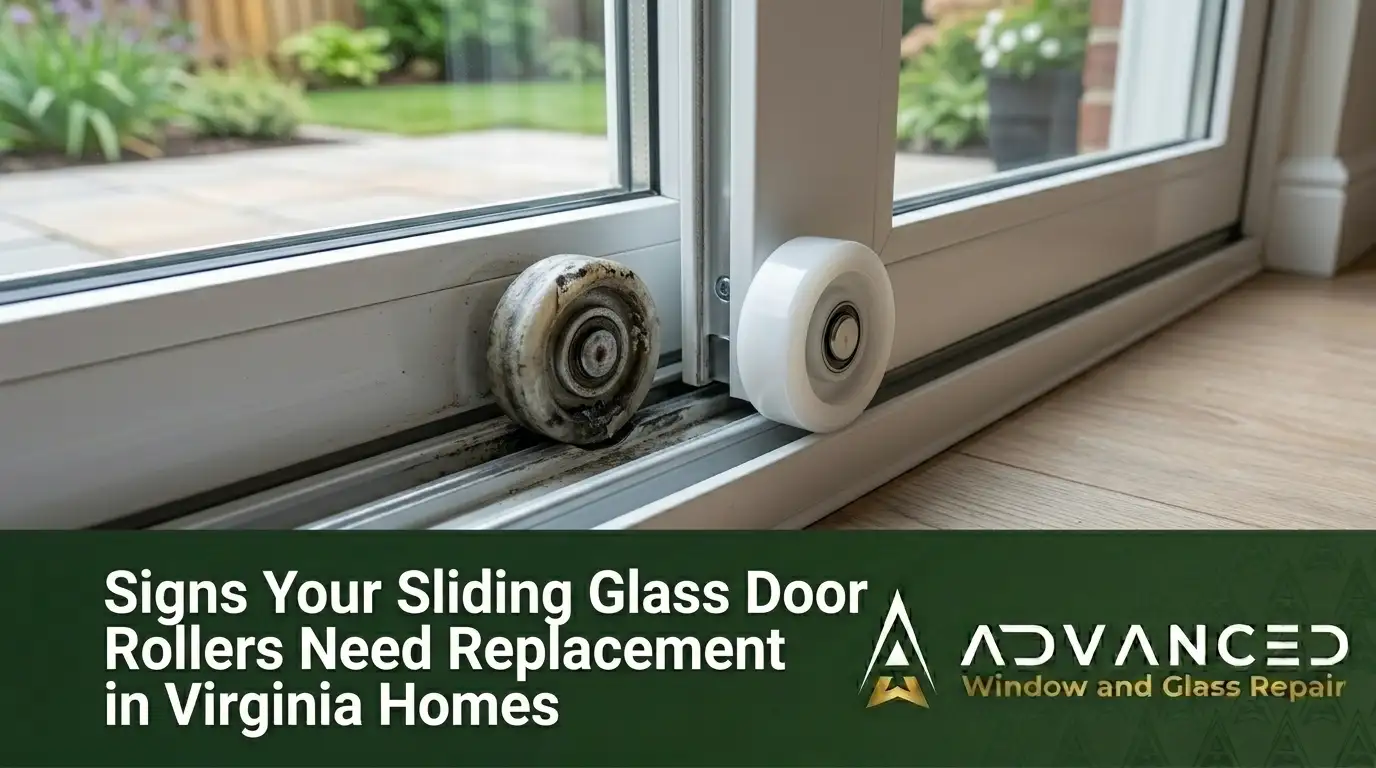
A patio door that resists every time it opens is more than an inconvenience. It usually indicates the rollers underneath are deteriorating. Recognizing the signs your sliding glass door rollers need replacement helps Virginia homeowners act before the damage spreads. Advanced Window & Glass Repair resolves sticking and grinding doors across the region. That encompasses glass repair across Northern Virginia for homes statewide. This guide examines the warning signs, the local causes, and the smartest way to fix it. Identifying the problem early prevents a small repair from becoming a major one.
How Sliding Door Rollers Work and Why They Wear Out
Rollers are the compact wheels at the bottom of a sliding door. They allow a heavy panel to glide along a metal track. A typical patio door weighs 80 to 150 pounds, so the rollers support considerable weight.
Over time, those wheels flatten, crack, or seize entirely. Dirt and grit gradually grind them down with every pass. Steel rollers can also corrode in humid conditions.
Quality rollers in a clean track can last 15 to 25 years. Cheap rollers or a dirty track may fail in 5 to 10. Usage and maintenance determine where a door lands within that range.
The Clear Signs the Rollers Are Failing
A failing roller rarely deteriorates all at once. The symptoms develop gradually, which makes them easy to overlook. Advanced Window & Glass Repair sees four signs come up again and again.
The Door Is Hard to Slide
A healthy door glides with one hand and minimal effort. A worn roller demands a forceful push or pull. When a door needs more than about five pounds of force, the rollers are likely the cause.
Grinding, Scraping, or Squeaking
Functioning rollers move almost silently. Deteriorated ones grind, scrape, or squeak along the track. That noise indicates metal or cracked plastic dragging where a wheel should roll.
Visible Flat Spots, Cracks, or Rust
A quick examination of the rollers reveals a lot. Flat spots, cracks, and rust all signal the end of their lifespan. A technician who lifts the door out often finds wheels that no longer spin freely.
The Door Jumps the Track or Sits Unevenly
A door that pops off the track has badly worn rollers. The same applies to a panel that appears tilted or uneven. These doors frequently catch, stick, or rebound when pushed.
That list covers the most prevalent red flags. A door exhibiting several simultaneously is overdue for new rollers. Professional sliding glass door services can confirm the diagnosis and handle the fix.
Why Virginia Homes Are Hard on Sliding Door Rollers
Local conditions accelerate roller wear. Virginia springs blanket everything in pollen, which accumulates inside door tracks. That grit essentially acts like sandpaper on the wheels.
Humid summers introduce another problem. Moisture corrodes steel rollers and stiffens their bearings. Patio doors also experience heavy daily use in warm months, which multiplies the wear.
Regular track cleaning slows all of this deterioration. Seasonal cleaning keeps abrasive grit out of the channel. Even so, rollers in a busy Virginia home eventually wear out.
Is It the Rollers or Just a Dirty Track?
Not every stiff door requires new rollers. A track packed with debris produces many of the same symptoms. The initial step is always a thorough cleaning.
Vacuum the track, wipe it down, and apply a silicone-based lubricant. Afterward, test the door to determine whether it glides. If it still drags, the rollers are the genuine problem. Professional residential door repair then resolves it.
Worn rollers cannot be rejuvenated with lubricant. The internal wheels are already compromised. At that point, replacement is the only durable solution.
Tired of fighting the patio door every time the dog goes out? A quick inspection shows whether the rollers or the track are to blame. Call (571) 351-3692 or reach out through the contact page for same-day sliding door service across Northern Virginia.
What Roller Replacement Costs and Involves
Roller replacement is one of the more economical door repairs. Advanced Window & Glass Repair usually finds it costs far less than a new door. The exact price depends on the door and the components.
The table below shows typical 2026 figures.
| Repair | Typical Cost |
|---|---|
| Roller replacement (parts and labor) | $100 to $300 |
| General sliding door repair | $150 to $800 |
| Track repair or replacement | Added as needed |
| Professional labor rate | $50 to $150 per hour |
The procedure itself involves removing the heavy panel and replacing the rollers. The track gets cleaned before the door is reinstalled. Professional sliding glass door repair also checks the track for bends that would ruin new rollers.
Should You Replace the Rollers Yourself or Call a Pro?
Roller replacement is a feasible do-it-yourself job, but not an easy one. The panel weighs up to 150 pounds and requires two people to lift safely. A dropped door can crack the glass or bend the frame.
Matching the new rollers to the old ones also trips up many homeowners. An incorrect size or bracket fails within months. A pitted or bent track needs attention at the same time.
Manufacturer guidance assists with the basics. Andersen’s gliding patio door care guide covers cleaning, operation, and roller adjustment. For a heavy door or a damaged track, a professional is the safer and more efficient choice.

How Professionals Replace Sliding Glass Door Rollers
Roller replacement follows a clear, methodical procedure. A professional works through it to protect the glass and the track. The four steps below demonstrate what the job actually involves.
Removing the Door Panel Safely
The operating panel must be removed before anything else. A technician backs out the adjustment screws to drop the rollers fully. The panel then lifts upward and tilts free of the bottom track.
This step demands genuine care and usually two people. A sliding panel weighs up to 150 pounds. Controlled removal prevents cracked glass and a bent frame.
Removing the Worn Rollers
With the panel positioned flat, the old rollers come out next. Each roller assembly is secured by a screw at the bottom rail. The technician removes that screw and extracts the deteriorated unit.
Stubborn assemblies sometimes resist after years of accumulated grit. Gentle prying frees them without damaging the rail. The old rollers then guide the exact replacement match.
Cleaning and Inspecting the Track
A clean track is essential before reinstallation of the panel. Debris and grit are vacuumed and wiped from the channel. New rollers installed in a dirty track fail quickly.
Inspection happens at the same moment. The technician inspects the track for bends, pitting, or corrosion. A damaged track gets repaired or replaced before the door returns.
Installing and Adjusting New Rollers
The matched rollers insert into the assembly and screw into place. The panel then lifts back into the upper track and lowers onto the sill. Careful alignment keeps the door square within its frame.
Final adjustment precisely fine-tunes the height. Turning the adjustment screws raises or lowers each side. A properly adjusted door glides smoothly and locks cleanly.
How to Choose the Right Replacement Rollers
Not all replacement rollers perform equivalently. The appropriate selection determines how long the repair lasts. Four considerations guide a sound decision.
Match the Size and Wheel Design
Replacement rollers must match the originals precisely. Size, bracket type, and wheel diameter all have to align. A mismatched roller binds or deteriorates within months.
The safest method is comparing the old part directly. A technician matches the assembly to the specific door model. Exact compatibility keeps the door operating as designed.
Steel, Nylon, or Ball-Bearing Rollers
Roller material strongly influences overall durability. Nylon rollers operate quietly and resist corrosion well. Steel ball-bearing rollers handle heavy doors and last the longest.
Cheaper pressed-steel rollers deteriorate the fastest. Stainless ball-bearing units are the premium option. The choice balances door weight, budget, and expected lifespan.
Single or Tandem Roller Assemblies
Rollers are manufactured in single-wheel and tandem-wheel designs. Tandem assemblies use two wheels to distribute the load. Heavier doors generally operate better on tandem rollers.
Using the correct configuration genuinely matters for support. A heavy panel on single rollers wears them prematurely. Matching the assembly type to the door protects the investment.
When the Track Needs Replacing Too
New rollers cannot compensate for a deteriorated track. A bent, pitted, or corroded channel destroys fresh rollers fast. Inspecting the track is part of any quality repair.
Sometimes a track cap restores a worn surface. Severe damage necessitates replacing the track entirely. Addressing both together prevents a repeat failure within a year.
When Roller Trouble Means Replacing the Whole Door
Most roller problems represent an affordable repair. Occasionally, though, the damage points toward a new door. Four situations indicate replacement may be the wiser investment.
A Bent or Corroded Track
The track is the foundation of smooth, reliable operation. Once it bends or corrodes badly, new rollers will not glide. Repeated repairs on a deteriorating track waste money.
A track replacement sometimes approaches the cost of surrounding work. At that point, a new door unit can make more sense. A professional assessment clarifies the better value.
A Warped or Damaged Frame
A sliding door depends on a square, structurally sound frame. Warping, rot, or impact damage throws the system out of alignment. Rollers cannot compensate for a frame that has shifted.
Frame damage also admits both air and water. That raises energy costs and invites further decay. Replacement restores both smooth operation and a proper seal.
Repeated Roller Failures
Quality replacement rollers should last many years. Failing again within months points to a deeper problem. The track, frame, or door weight is usually the real cause.
Chasing the same repair repeatedly becomes expensive. A thorough evaluation identifies the underlying issue. Sometimes a new door ends the cycle for good.
Rising Energy Costs and Old Age
An aging sliding door progressively loses efficiency. Worn seals and a tired frame let conditioned air escape. Higher energy bills frequently result.
A door near the end of its life rarely justifies major repairs. Modern units seal better and operate considerably more smoothly. Replacement can repay the cost through comfort and lower bills.
Conclusion
Sticking, grinding, visible wear, and a door that jumps the track all point to failing rollers. Virginia pollen, humidity, and heavy use deteriorate them faster than in many regions. Acting early keeps the repair minor and protects the glass and frame.
Consistent upkeep also extends the life of new rollers. Advanced Window & Glass Repair fixes sliding doors fast and inspects the whole system. A guide to maintenance tips for sliding patio doors helps keep them gliding.
A struggling patio door only worsens with each season of Virginia weather. The team at Advanced Window & Glass Repair restores smooth, quiet operation with same-day service. Call (571) 351-3692 or use the contact page for a fast inspection and repair.
Frequently Asked Questions
1. What are the signs that sliding glass door rollers need replacing?
The most common indicator is a door that no longer glides easily. If it takes more than about five pounds of force to slide, the rollers are usually wearing out. Other clear signals include grinding, scraping, or squeaking sounds as the door moves, since functioning rollers operate almost silently. A door that catches, sticks, jumps off its track, or sits unevenly is also pointing to roller trouble. On inspection, flat spots, cracks, or corrosion on the wheels confirm it. One important diagnostic separates rollers from a dirty track. Clean the track thoroughly and apply a silicone lubricant. If the door still drags afterward, the rollers are the genuine culprit. These problems develop gradually, so many homeowners adjust to a harder and harder push without realizing it. Identifying the signs early matters, because forcing a failing door strains the frame and can crack the glass. Virginia homes face accelerated wear from pollen and humidity. An annual inspection of the rollers and track is a smart habit. It prevents considerably bigger repairs later.
2. Can I just clean and lubricate the track instead of replacing the rollers?
Cleaning and lubricating should always be the initial step, and it resolves many sticky-door problems. Dirt, pollen, and grit accumulate in the track and mimic the symptoms of worn rollers. Begin by vacuuming the track and wiping it with a damp cloth. Then apply a silicone-based lubricant rather than an oily one, since oil attracts additional contamination. Then test the door. If it glides smoothly again, the rollers were fine and the track was simply contaminated. If the door still drags, sticks, or makes noise after thorough cleaning, the rollers themselves are worn. Cleaning alone will not resolve them. Worn wheels have internal damage that no lubricant can reverse or restore. At that point, continuing to clean and force the door merely delays the inevitable and risks additional damage. In Virginia, regular cleaning is especially valuable because heavy spring pollen saturates tracks quickly. Establishing track cleaning as a seasonal habit extends roller life and keeps the door operating smoothly. Once rollers are visibly worn or the door fails the post-cleaning test, replacement is the only lasting solution.
3. How long do sliding glass door rollers usually last?
Sliding door rollers typically last anywhere from 5 to 25 years, and the range comes down to quality and care. High-grade stainless steel ball-bearing rollers running in a clean, well-maintained track can last 15 to 25 years. Cheaper pressed-steel rollers deteriorate faster. In a dirty or neglected track, they frequently last just 5 to 10 years. The difference is primarily friction. Grit in the track grinds the wheels down, and moisture corrodes steel components, both of which shorten lifespan. Usage matters too, since a patio door operated many times a day wears faster than a rarely used one. Virginia conditions tend to push rollers toward the shorter end of the range. Spring pollen saturates the tracks, humid summers encourage corrosion, and warm-weather patio use is heavy. Homeowners can extend roller life with simple habits, like cleaning the track each season and applying a dry silicone lubricant. Annual inspection also helps identify wear early. A door that once glided easily begins requiring effort. That usually signals the rollers are approaching the end of their service life.
4. How much does it cost to replace sliding glass door rollers?
Replacing sliding glass door rollers is one of the more affordable door repairs. The rollers themselves are inexpensive, frequently $25 to $40 for the components. With professional labor included, total roller replacement usually runs about $100 to $300. The exact figure depends on the door and the complexity involved. Broader sliding door repairs vary more widely, from roughly $150 to $800. Many homeowners land near $400 once tracks, alignment, or hardware are involved. In Virginia, local repair costs for sliding doors commonly fall within the $270 to $400 range. Several factors influence the price. Heavier or double doors require more labor, and upper-floor doors cost more. A damaged track that needs repair adds to the total. Most professionals also maintain a minimum service fee, often $100 or more. The fundamental point is straightforward. Roller replacement is almost always far cheaper than replacing the entire door, which can exceed a thousand dollars. Getting a written estimate first makes the decision clear and confirms whether the track also needs attention.
5. Can I replace sliding door rollers myself, or should I hire a pro?
Roller replacement is technically a do-it-yourself job, but it is not a simple one. The biggest challenge is the door itself, since a sliding glass panel weighs 80 to 150 pounds. Removing it safely usually requires two people, and a dropped panel can shatter the glass or bend the frame. Matching the replacement rollers is the other frequent pitfall. The new rollers must match the original in size, bracket type, and wheel design, or they will fail prematurely. A bent or pitted track also requires attention simultaneously. Otherwise brand-new rollers can deteriorate within a year or two. For a handy homeowner with help and a sound track, a careful do-it-yourself swap is achievable. For a heavy door, a damaged track, or any uncertainty about parts, a professional is the safer and faster choice. A professional removes the panel safely, matches the correct rollers, cleans and inspects the track, and fine-tunes the alignment. That combination is what makes the repair durable, rather than becoming a recurring problem within months.
6. What happens if I keep using a sliding door with worn rollers?
Continuing to operate a door with worn rollers almost always makes the problem worse and more expensive. As the wheels flatten or seize, the door drags directly on the track instead of rolling smoothly. That dragging grinds and bends the track, which then damages any new rollers installed later. The additional resistance also forces people to shove the door harder. That strain can crack or shatter the glass panel. A door that jumps off its track becomes a safety concern too. It may not lock properly, or it could potentially fall. A simple, affordable roller swap can escalate quickly. Ignored long enough, it becomes a track replacement, glass repair, or full door replacement. In a Virginia home, where pollen and humidity already accelerate wear, that decline can happen quickly. The smarter approach is to address the symptoms early, while the remedy is still just the rollers. A quick inspection identifies the problem, and an early repair protects the more expensive components of the door system.


