
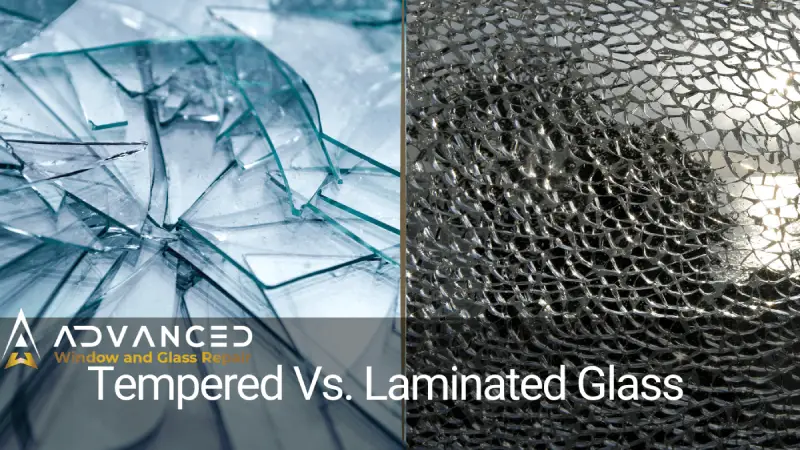
Tempered glass and laminated glass are both classified as safety glass, but they perform differently in ways that matter for windows, doors, shower enclosures, and commercial glazing. Choosing the wrong type for a specific application creates a safety or code compliance problem.
Advanced Window & Glass Repair provides glass repair and replacement services across Northern Virginia, DC, and Maryland, and the glass type specified affects both the quote and the installation method. This guide breaks down how each type is made, where each performs best, and how to decide between them.
What Makes Glass “Safety Glass”
Standard annealed glass breaks into large, sharp shards. Those shards cause serious lacerations, which is why building codes require safety glass in locations where human impact is likely. Safety glass is designed to either resist breaking under impact or to break in a way that significantly reduces injury risk.
Both tempered and laminated glass qualify as safety glass under U.S. building codes. The relevant federal standard is CPSC 16 CFR Part 1201, which governs architectural glazing in doors, shower enclosures, and sliding patio doors. For more detail on what the standard requires, the U.S. Consumer Product Safety Commission safety glazing standard (CPSC 16 CFR Part 1201) outlines the impact categories and testing procedures that apply to residential and commercial installations. For a broader overview of glass types that meet these requirements, the what is safety glass guide covers the full range of certified options.
The key distinction between tempered and laminated glass is what happens when either type breaks. Tempered glass shatters into small, granular pieces. Laminated glass cracks but holds together because the glass layers stay bonded to the interlayer. Both outcomes reduce injury risk compared to standard glass, but they do so in different ways and suit different applications as a result.
What Is Tempered Glass
Tempered glass is produced through a controlled thermal process. The glass is heated to approximately 620°C. It is then rapidly cooled using jets of cold air. This thermal treatment puts the outer surfaces under compression and the interior under tension. The result is a pane four to five times stronger than standard glass of the same thickness.
When tempered glass breaks, the internal tension causes it to fracture into small, blunt-edged pieces. Large jagged shards are not produced. This breakage pattern is the defining safety characteristic of tempered glass. It is why code requires tempered glass in shower enclosures, glass doors, and sidelites adjacent to entry doors.
One important limitation applies. Tempered glass cannot be cut, drilled, or modified after the tempering process. Any cutting or drilling must be completed before the glass enters the tempering oven. A tempered pane ordered at the wrong size cannot be trimmed on-site. It must be replaced. Advanced Window & Glass Repair takes precise measurements before ordering any tempered glass for residential or commercial installations across Northern Virginia, DC, and Maryland. For full assessment and glass replacement services, residential glass repair covers both tempered and laminated glass work for homes across the DMV area.
What Is Laminated Glass
Laminated glass is made by bonding two or more panes of glass around one or more interlayers. The most common interlayer material is polyvinyl butyral (PVB). Ionoplast and EVA interlayers are used in specialist applications. The assembly is bonded under heat and pressure to form a single unit.
When laminated glass breaks, the interlayer holds the fragments in place. The pieces remain attached to the film rather than falling free. This behaviour makes laminated glass the correct choice wherever glass retention after breakage is a priority. These include hurricane glazing, overhead glazing, and security installations.
Laminated glass provides better sound attenuation than tempered glass of equivalent thickness. The PVB interlayer absorbs and dampens sound waves. This makes it a practical choice for windows facing busy roads, flight paths, or any high-noise environment.
Key Differences: Tempered vs Laminated
| Property | Tempered Glass | Laminated Glass |
| Manufacturing process | Heat treatment (thermal tempering) | Bonded glass and interlayer under heat/pressure |
| Breakage pattern | Shatters into small granular pieces | Cracks but remains intact |
| Strength | 4 to 5x stronger than standard glass | Depends on interlayer and glass thickness |
| Can be cut after manufacture | No | Yes (before installation) |
| Sound insulation | Moderate | Better than tempered |
| UV blocking | Partial (with coatings) | High (PVB blocks ~99% of UV) |
| Security after breakage | Poor. No barrier once broken | Maintains barrier after cracking |
| Typical cost | Lower | Higher |
| Code requirement locations | Shower doors, entry door glass, patio doors | Overhead glazing, hurricane zones, security |
Typical Applications for Each Glass Type
Tempered glass is the standard specification for shower enclosures, shower doors, and the glass panels in and adjacent to entry doors. It is also required for office partitions, glass balustrades, and the rear and side windows of vehicles. Building codes require tempered glass in these locations because the granular breakage pattern protects occupants from laceration when contact occurs.
Laminated glass is specified for windshields, skylights, overhead glazing, and hurricane-rated windows and doors. It is also required for security glazing in banks and retail storefronts, and any application where glass must remain intact after breaking. In hurricane-prone or high-wind areas, laminated glass is required because it holds together under repeated impact rather than shattering and creating an opening.
Some applications use both. Insulated glass units (IGUs) can combine a tempered outer pane with a laminated inner pane. This gives the window both impact resistance and post-breakage retention within a single unit.
How to Choose Between Tempered and Laminated Glass
The application determines the correct choice, not personal preference. Tempered glass is appropriate for locations where the primary risk is human impact and where post-breakage structural integrity is not required. Laminated glass is required wherever the glass must stay in place after breaking.
For most residential shower doors, interior glass partitions, and standard window replacements, tempered glass meets the code requirement and costs less. For skylight glazing, floor-level windows in hurricane zones, overhead commercial glazing, or any installation requiring a security barrier, laminated glass is the correct specification.
When budget is the deciding factor between two equally viable options, tempered glass costs less. When sound reduction, UV blocking, or security are priorities, laminated glass delivers better performance. A professional assessment covers specification advice for homeowners unsure which glass type applies to their specific installation.
Not sure which glass type is required for a specific window or door in your home or business? Advanced Window & Glass Repair can assess the installation, confirm the correct specification, and provide a quote across Northern Virginia, DC, and Maryland. Call (571) 351-3692 or visit the contact page.
Cost Comparison
Tempered glass costs less to produce than laminated glass. The manufacturing process does not require the additional materials or bonding steps involved in lamination. For standard residential applications such as shower doors, the cost difference is typically 20 to 40 percent.
Laminated glass carries a higher material cost. The premium is justified where code requires it or where it delivers a performance benefit that tempered glass cannot match. Replacing a laminated unit with tempered glass to save cost creates a code compliance problem wherever laminated glass is a specified requirement. For full detail on the federal safety glazing requirements that determine which glass type applies in specific locations, the U.S. Consumer Product Safety Commission safety glazing standard outlines the impact categories for architectural glazing in residential and commercial buildings.
The table below covers typical 2026 cost ranges for Northern Virginia, DC, and Maryland. Prices vary based on glass size, thickness, and whether the pane is part of an IGU or a single-pane installation.
| Glass Type | Typical Residential Cost Range (2026) |
| Tempered glass, standard size | $100 to $250 per pane |
| Tempered glass, large or custom | $200 to $500 per pane |
| Laminated glass, standard size | $150 to $350 per pane |
| Laminated glass, large or security | $300 to $700 per pane |
| Combined IGU (tempered + laminated) | $400 to $900 per unit |
Conclusion
Tempered glass and laminated glass are not interchangeable. Each is designed for a specific set of conditions and building code requirements. Tempered glass is the right choice for impact-resistant applications where post-breakage structural integrity is not needed. Laminated glass is required wherever the glass must hold together after breaking, including overhead glazing, hurricane-rated openings, and security installations.
For homeowners and commercial property managers in Northern Virginia, DC, and Maryland, confirming the correct glass type before ordering a replacement pane prevents code issues and callbacks. Advanced Window & Glass Repair assesses each installation individually and specifies the correct glass for the application. For further guidance on matching glass type to specific window and door openings, the guide to choosing the right glass for windows and doors is a useful next step. It covers the full range of residential and commercial scenarios.
Advanced Window & Glass Repair supplies and installs both tempered and laminated glass for residential and commercial properties across Northern Virginia, DC, and Maryland. Call, or reach the team through the contact page.
Frequently Asked Questions
What is the main difference between tempered and laminated glass?
Tempered glass is strengthened through a rapid heating and cooling process, which causes it to shatter into small blunt pieces when broken. Laminated glass is made by bonding glass panes around a PVB interlayer, which holds the glass together when it cracks. The practical difference is post-breakage behaviour: tempered glass leaves the opening clear after breaking, while laminated glass stays in place and maintains a barrier. The right choice depends on where the glass is installed and what the relevant building code requires.
Where is tempered glass required by code?
U.S. building codes require tempered glass in shower enclosures and shower doors, glass in and adjacent to entry doors, glass in sliding patio doors, glass railings, and certain commercial partitions. The relevant federal standard is CPSC 16 CFR Part 1201, which specifies impact categories for architectural glazing. Local building codes may add further requirements. When replacing glass in any of these locations, the replacement pane must meet the same safety glazing standard as the original.
Can laminated glass be used instead of tempered glass?
In most code-required locations, laminated glass can substitute for tempered glass because both meet the CPSC impact standard for safety glazing. Laminated glass can also be cut and modified after manufacture, which makes it more flexible for non-standard opening sizes. However, it costs more than tempered glass of equivalent size, so tempered remains the standard choice unless laminated is specifically required for overhead glazing, hurricane zones, or security applications.
How do I tell tempered glass from laminated glass?
Tempered glass typically has a small etched or printed mark in one corner identifying it as tempered. Laminated glass may also carry certification marks. Viewed at an angle, laminated glass often shows a faint line or slight colour difference at the edge from the interlayer. If the pane has been broken previously and the pieces remained in place rather than falling out, it is laminated. When in doubt, a glass professional can identify the type during an inspection.
Is laminated glass better for noise reduction?
Laminated glass reduces sound transmission better than tempered glass of the same thickness because the PVB interlayer absorbs and dampens acoustic energy. The improvement is most noticeable at mid-range frequencies. For significant noise reduction in homes near roads or flight paths, an acoustic-grade laminated glass with a thicker PVB interlayer provides better performance than standard laminated units. Double pane IGUs that incorporate a laminated pane on the exterior side provide the best combination of thermal and acoustic performance.
Does laminated glass block UV rays?
The standard PVB interlayer in laminated glass blocks approximately 99 percent of UV radiation. This protects interior furnishings, flooring, and artwork from fading caused by ultraviolet exposure. Tempered glass alone provides minimal UV protection unless a separate Low-E coating is applied. For applications where UV protection is a priority, laminated glass is the more effective choice without requiring an additional coating.


